Genetics & Family · Cancer
Some Cancers Can Be “Inherited” from Parents to Their Children
Precision Health ·
When we think of cancer, we may assume that it is mainly caused by lifestyle factors. However, genetic factors can also play an important role in the risk of developing certain types of cancer.
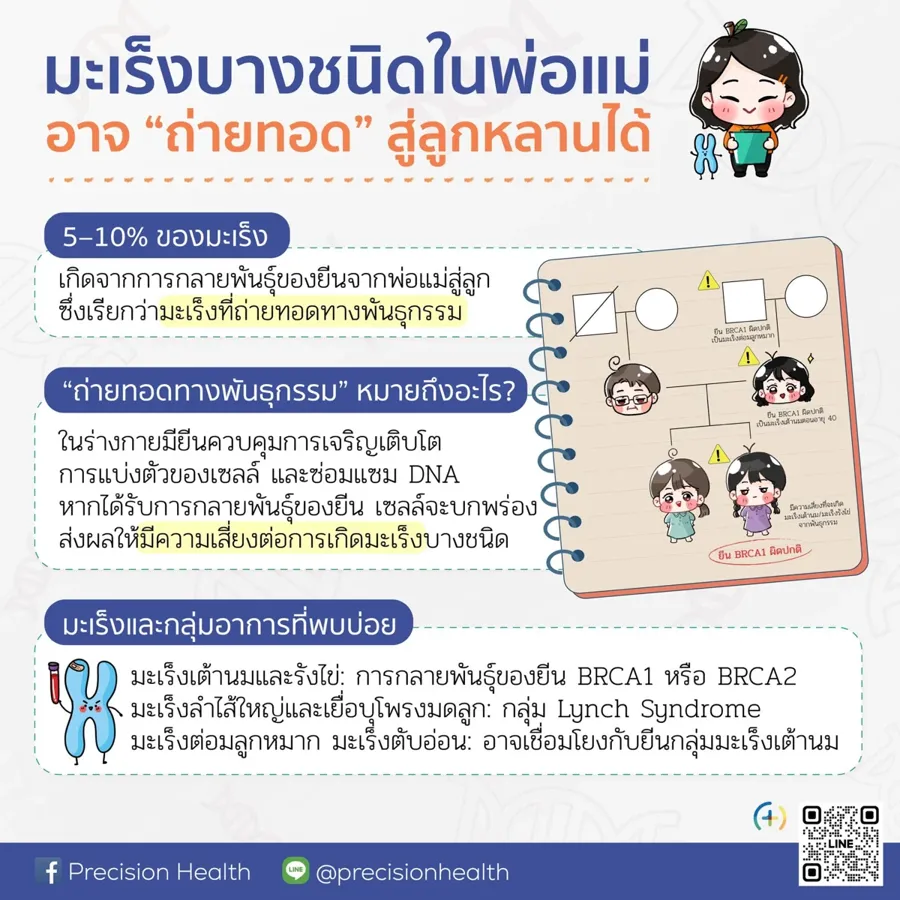
Most cancers are not directly inherited. However, approximately 5–10% of all cancers are associated with inherited genetic mutations passed from parents to their children. This is known as hereditary cancer.
What Does “Inherited” Mean?
Our genes play an important role in controlling cell growth, cell division, and DNA repair. If a person inherits a harmful mutation in one of these genes from a parent, their cells may have an increased risk of developing certain cancers.
However, having a cancer-related gene mutation does not mean that a person will definitely develop cancer. It means that their risk may be higher than that of the general population. Knowing this risk can help guide appropriate screening and health monitoring.
Common Cancers and Hereditary Conditions
- Breast and ovarian cancer: Often associated with mutations in the BRCA1 or BRCA2 genes.
- Colorectal and endometrial cancer: May be associated with Lynch syndrome.
- Prostate and pancreatic cancer: In some families, the risk may be linked to genes that are also associated with hereditary breast and ovarian cancer.
Family History Warning Signs to Look Out For
- Several close family members, such as parents, siblings, or children, have had the same or related types of cancer.
- Cancer was diagnosed at a relatively young age, such as breast or colorectal cancer before age 50.
- One family member has had more than one type of cancer or cancer affecting both paired organs, such as cancer in both breasts.
- A rare type of cancer occurs in a family member, such as male breast cancer.
How Can You Take Action?
If your family history includes any of these warning signs, discussing your family history with a doctor or genetic health professional can help determine the most appropriate next steps.
Depending on the individual and family history, genetic testing may be considered to assess inherited cancer risk and help develop a personalized screening and monitoring plan.
Understanding your family history and genetic risk is not about creating fear. It is about gaining information that can help you take preventive action and make more informed decisions about your health.
Know your genes. Know your risk. Plan your health with greater confidence.