Health & Wellbeing
Wading Through Floodwater: What Diseases Should You Watch Out for?
Precision Health ·
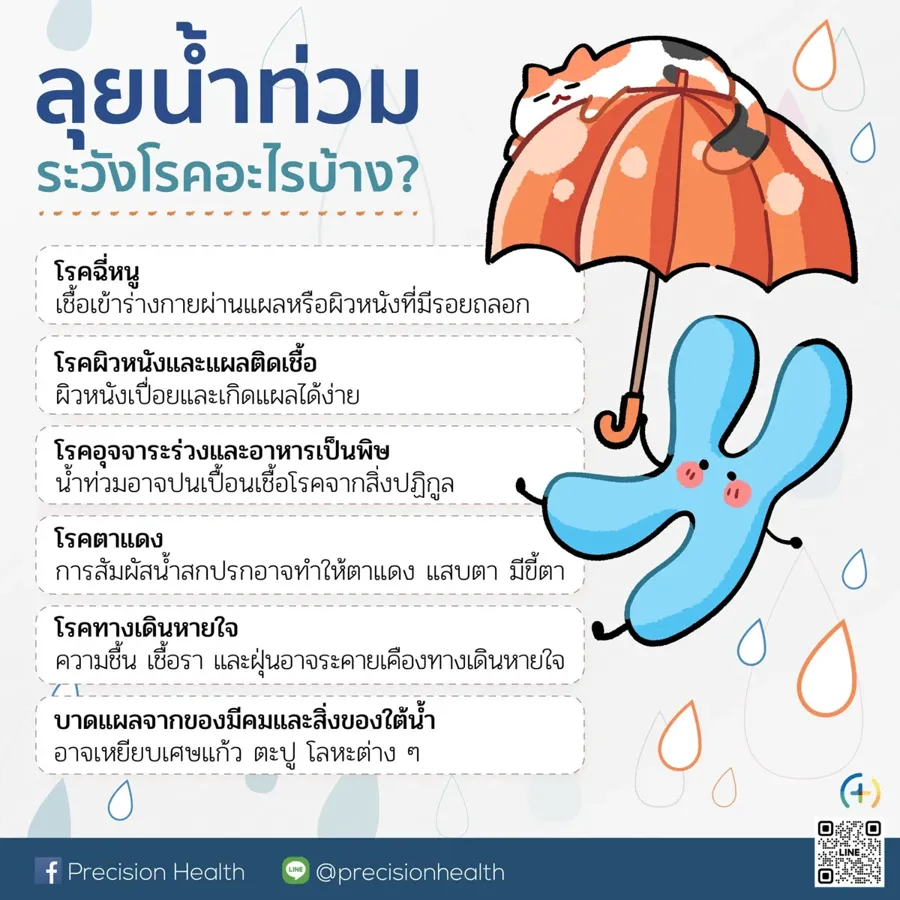
Floodwater poses more than just a risk of drowning. It may also be contaminated with bacteria, chemicals, sewage, and other harmful substances. The risk can be higher when you have to walk through floodwater for an extended period of time.
1. Leptospirosis (Leptospira infection)
Leptospirosis is caused by bacteria that may be present in contaminated water or soil. The bacteria can enter the body through cuts, wounds, or abrasions on the skin. Common symptoms include high fever, headache, muscle aches, and red eyes.
2. Skin Infections and Infected Wounds
Prolonged exposure to water can cause the skin to become soft and more prone to cuts and wounds. Contact with contaminated floodwater may increase the risk of infection, especially when there are open wounds.
3. Diarrhea and Food Poisoning
Floodwater may be contaminated with bacteria and other pathogens from sewage and waste. Consuming contaminated food or water can cause diarrhea, vomiting, abdominal pain, and other gastrointestinal symptoms.
4. Conjunctivitis (Pink Eye)
Contact with contaminated water may increase the risk of eye infections, which can cause redness, irritation, burning, or discharge from the eyes.
5. Respiratory Illnesses
After the floodwater recedes, moisture, mold, and dust generated during cleaning may trigger coughing, sneezing, or respiratory irritation, particularly in people with pre-existing respiratory conditions.
6. Injuries from Sharp Objects and Debris Underwater
Floodwater can make it difficult to see what is beneath the surface. You may accidentally step on broken glass, nails, metal objects, or other debris, resulting in cuts and increasing the risk of infection.
What Should You Do After Wading Through Floodwater?
- Shower and wash your feet thoroughly with clean water and soap.
- Clean and disinfect any wounds as soon as possible.
- Avoid consuming food or drinking water that may have been contaminated.
- If you develop a high fever, severe headache, unusual muscle aches, red eyes, severe diarrhea, or wounds that become swollen, red, or produce pus, seek medical attention promptly.
- Tell your healthcare provider that you have recently been exposed to floodwater.
After wading through floodwater, don't forget to take care of your health and monitor yourself for any unusual symptoms. If you experience any concerning symptoms, seek medical attention promptly for appropriate evaluation and treatment.