Precision Health Co., Ltd.
มะเร็งบางชนิดในพ่อแม่ อาจ “ถ่ายทอด” สู่ลูกหลานได้
เมื่อพูดถึง “มะเร็ง” หลายคนอาจคิดว่าเป็นโรคที่เกิดจากพฤติกรรมการใช้ชีวิตเพียงอย่างเดียว แต่ความจริงแล้ว ปัจจัยทางพันธุกรรมก็มีส่วนสำคัญต่อความเสี่ยงในการเกิดมะเร็งบางชนิด
โดยทั่วไป มะเร็งส่วนใหญ่ไม่ได้เกิดจากการถ่ายทอดทางพันธุกรรมโดยตรง แต่ประมาณ 5–10% ของมะเร็งทั้งหมดเกิดจากการกลายพันธุ์ของยีนที่ถ่ายทอดจากพ่อแม่สู่ลูก ซึ่งเรียกว่า Hereditary Cancer หรือมะเร็งที่ถ่ายทอดทางพันธุกรรม
“ถ่ายทอดทางพันธุกรรม” หมายถึงอะไร?
ในร่างกายของเรามียีนทำหน้าที่ควบคุมการเจริญเติบโต การแบ่งตัวของเซลล์ และซ่อมแซมความเสียหายของ DNA หากเราได้รับการกลายพันธุ์ของยีนเหล่านี้มาจากพ่อหรือแม่ เซลล์ในร่างกายก็จะมีภาวะบกพร่องตั้งแต่กำเนิด ส่งผลให้มีความเสี่ยงต่อการเกิดมะเร็งบางชนิดสูงกว่าคนทั่วไป
อย่างไรก็ตาม การมียีนความเสี่ยงไม่ได้หมายความว่าจะต้องเป็นมะเร็งเสมอไป แต่หมายถึงระดับความเสี่ยงที่สูงขึ้น ซึ่งต้องการการวางแผนตรวจคัดกรองและการเฝ้าระวังอย่างใกล้ชิดและเหมาะสม
มะเร็งและกลุ่มอาการที่เกี่ยวข้องกับพันธุกรรมที่พบบ่อย
- มะเร็งเต้านมและรังไข่: มักสัมพันธ์กับการกลายพันธุ์ของยีน BRCA1 หรือ BRCA2
- มะเร็งลำไส้ใหญ่และเยื่อบุโพรงมดลูก: มักสัมพันธ์กับกลุ่ม Lynch Syndrome
- มะเร็งต่อมลูกหมากและมะเร็งตับอ่อน: ในบางครอบครัวอาจพบความเสี่ยงเชื่อมโยงกับยีนกลุ่มเดียวกับมะเร็งเต้านม
สัญญาณเตือนที่ควรสังเกตในประวัติครอบครัว
- มีคนในครอบครัวสายตรง (พ่อ แม่ พี่ น้อง ลูก) เป็นมะเร็งชนิดเดียวกันหลายคน
- ตรวจพบมะเร็งตั้งแต่อายุน้อยกว่าปกติ (เช่น มะเร็งเต้านมหรือลำไส้ใหญ่ก่อนอายุ 50 ปี)
- สมาชิกในครอบครัวคนเดียวเป็นมะเร็งมากกว่า 1 ชนิด หรือเป็นมะเร็งที่อวัยวะคู่ทั้งสองข้าง (เช่น เต้านมทั้งสองข้าง)
- พบมะเร็งชนิดที่พบน้อยในเพศนั้นๆ เช่น มะเร็งเต้านมในผู้ชาย
แนวทางการรับมือและวางแผนดูแลสุขภาพ
หากพบว่าครอบครัวมีสัญญาณความเสี่ยงข้างต้น การประเมินประวัติครอบครัวร่วมกับแพทย์หรือ ผู้เชี่ยวชาญด้านพันธุศาสตร์สุขภาพ จะช่วยให้ทราบแนวทางที่เหมาะสม โดยอาจพิจารณา การตรวจยีน (Genetic Testing) เพื่อประเมินความเสี่ยงเฉพาะบุคคล และวางแผนการตรวจคัดกรองล่วงหน้าตั้งแต่เนิ่นๆ
การรู้ประวัติครอบครัวและความเสี่ยงทางพันธุกรรม ไม่ได้มีไว้ให้กังวล แต่มีไว้เพื่อให้เราป้องกัน และวางแผนดูแลสุขภาพได้อย่างตรงจุดที่สุด
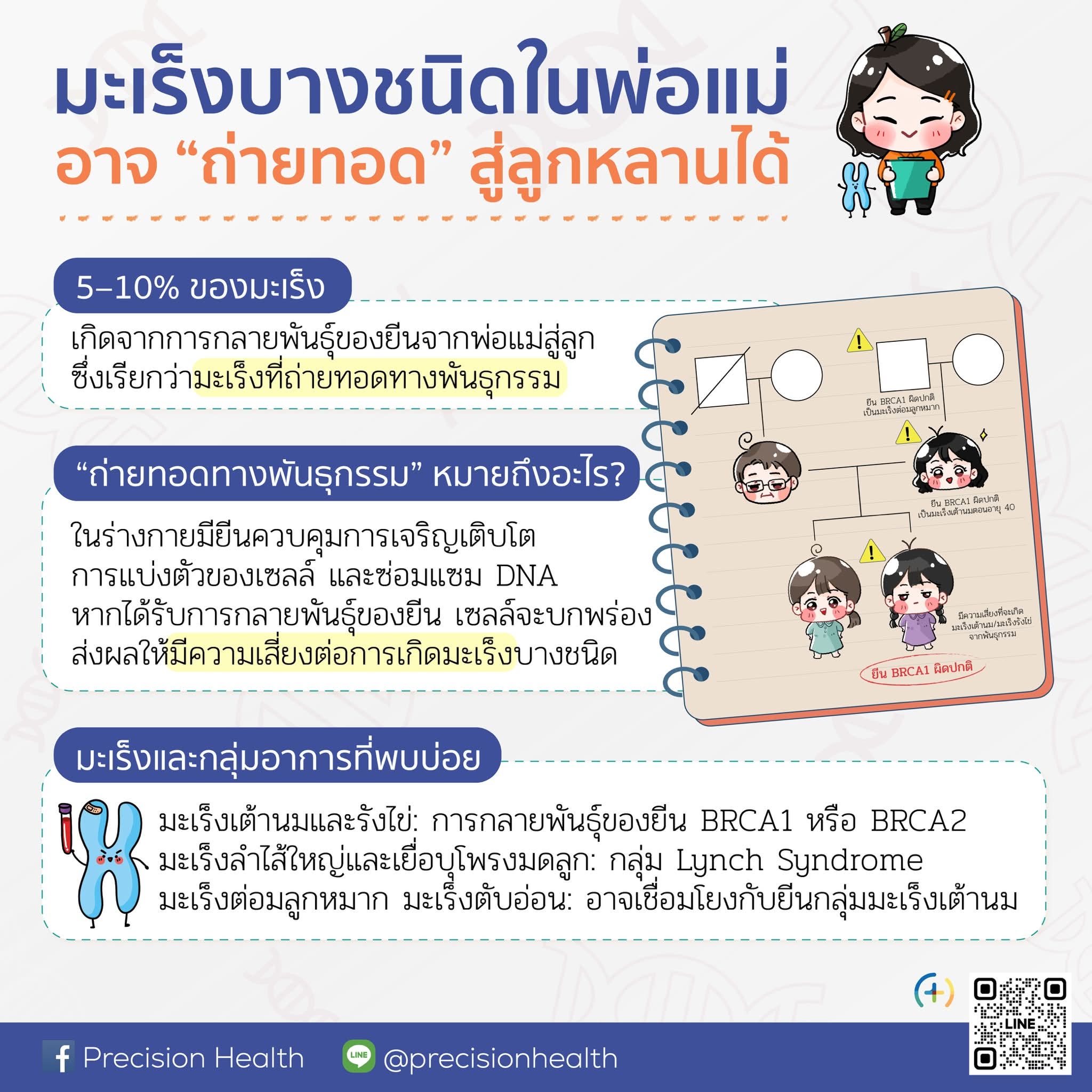
Some Cancers Can Be “Inherited” from Parents to Their Children
When we think of cancer, we may assume that it is mainly caused by lifestyle factors. However, genetic factors can also play an important role in the risk of developing certain types of cancer.
Most cancers are not directly inherited. However, approximately 5–10% of all cancers are associated with inherited genetic mutations passed from parents to their children. This is known as hereditary cancer.
What Does “Inherited” Mean?
Our genes play an important role in controlling cell growth, cell division, and DNA repair. If a person inherits a harmful mutation in one of these genes from a parent, their cells may have an increased risk of developing certain cancers.
However, having a cancer-related gene mutation does not mean that a person will definitely develop cancer. It means that their risk may be higher than that of the general population. Knowing this risk can help guide appropriate screening and health monitoring.
Common Cancers and Hereditary Conditions
- Breast and ovarian cancer: Often associated with mutations in the BRCA1 or BRCA2 genes.
- Colorectal and endometrial cancer: May be associated with Lynch syndrome.
- Prostate and pancreatic cancer: In some families, the risk may be linked to genes that are also associated with hereditary breast and ovarian cancer.
Family History Warning Signs to Look Out For
- Several close family members, such as parents, siblings, or children, have had the same or related types of cancer.
- Cancer was diagnosed at a relatively young age, such as breast or colorectal cancer before age 50.
- One family member has had more than one type of cancer or cancer affecting both paired organs, such as cancer in both breasts.
- A rare type of cancer occurs in a family member, such as male breast cancer.
How Can You Take Action?
If your family history includes any of these warning signs, discussing your family history with a doctor or genetic health professional can help determine the most appropriate next steps.
Depending on the individual and family history, genetic testing may be considered to assess inherited cancer risk and help develop a personalized screening and monitoring plan.
Understanding your family history and genetic risk is not about creating fear. It is about gaining information that can help you take preventive action and make more informed decisions about your health.
Know your genes. Know your risk. Plan your health with greater confidence.
By adminph
Posted 2026-10-01 00:00:00