Health & Wellbeing
Stress Affects Your Body More Than You Think
Precision Health ·
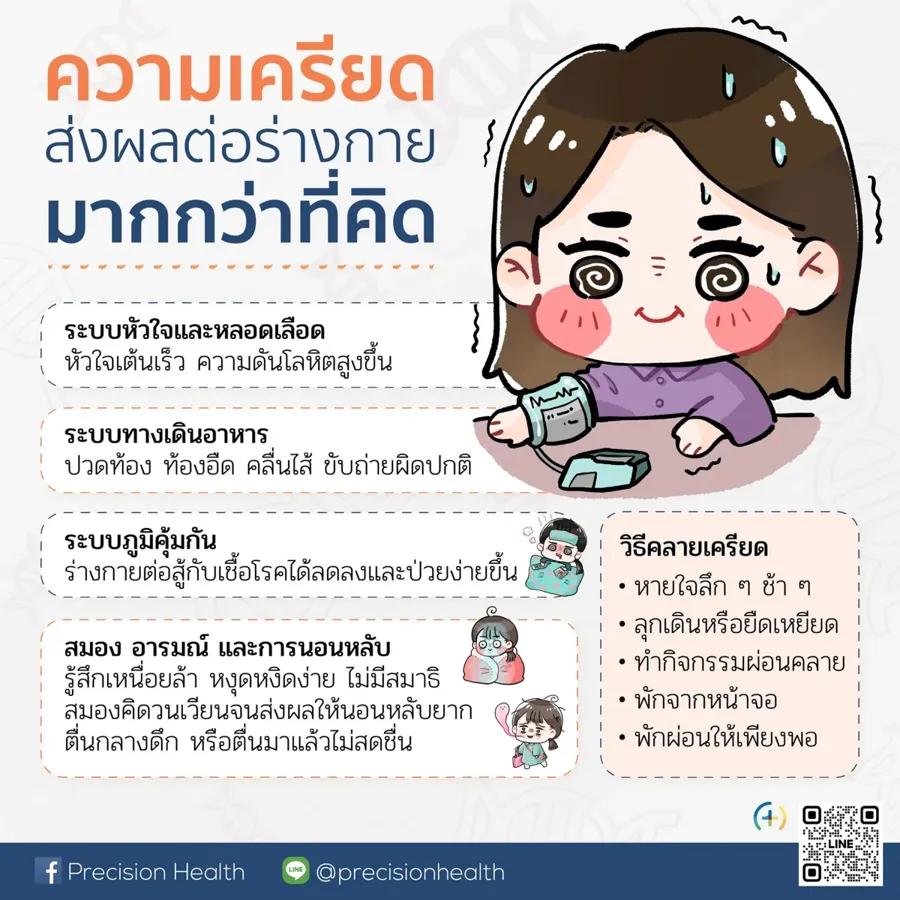
Ever noticed that when you’re under a lot of stress, your body starts sending you warning signs?
Stress doesn’t just affect your emotions or mental well-being. When it continues for a long time, it can also affect different systems throughout the body.
Heart & Blood Vessels
Stress can make your heart beat faster and temporarily raise your blood pressure. Chronic stress may also increase the long-term risk of heart disease.
Brain, Mood & Sleep
Stress can leave you feeling exhausted, irritable, or unable to concentrate. Racing thoughts may also make it harder to fall asleep, cause you to wake up during the night, or leave you feeling tired even after waking up.
Digestive System
Stress may contribute to stomach pain, bloating, nausea, and changes in bowel habits.
Immune System
Long-term stress can affect immune function and may make it harder for the body to fight off infections.
Simple Ways to Reduce Stress Every Day
- Practice deep breathing: Take 5–10 slow, deep breaths.
- Move your body: Take a short walk or stretch for 5–10 minutes.
- Change your surroundings: Listen to your favorite music, read a book, or enjoy a warm drink.
- Rest your eyes: Take regular breaks from your phone or computer screen.
- Get enough sleep: Give your body and mind time to rest and recover.
Stress is a normal part of life, but it shouldn’t become your everyday normal.
Make time to relax, stay physically active, and talk openly with someone you trust. Because taking care of your health isn’t just about your body—it’s also about taking care of your mind and heart.