Precision Health Co., Ltd.
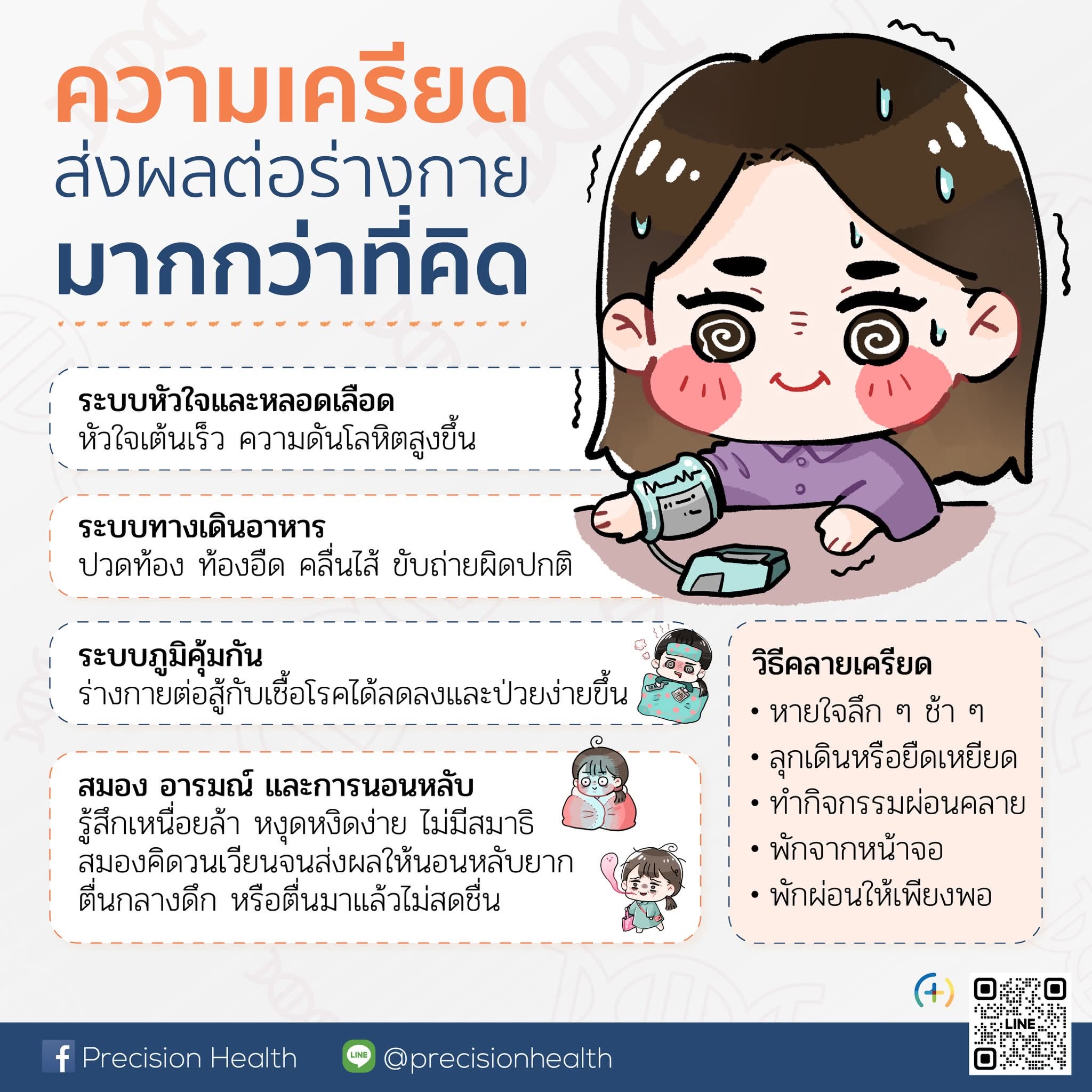
ความเครียดส่งผลต่อร่างกายมากกว่าที่คิด
เคยไหม? ช่วงไหนที่เครียดมาก ๆ ร่างกายก็มักจะเริ่มส่งสัญญาณเตือนบางอย่างออกมา
ความเครียดไม่ได้ส่งผลแค่เรื่องอารมณ์หรือจิตใจ แต่เมื่อเกิดขึ้นอย่างต่อเนื่อง ร่างกายจะเริ่มส่งผลกระทบต่อระบบต่าง ๆ ดังนี้
ระบบหัวใจและหลอดเลือด
หัวใจเต้นเร็ว ความดันโลหิตสูงขึ้น และหากเกิความเครียดเรื้อรัง อาจเพิ่มความเสี่ยงต่อโรคหัวใจในระยะยาว
ระบบทางเดินอาหาร
ส่งผลให้เกิดอาการปวดท้อง ท้องอืด คลื่นไส้ หรือระบบขับถ่ายรวนผิดปกติ
ระบบภูมิคุ้มกัน
รบกวนการทำงานของระบบคุ้มกัน ทำให้ร่างกายต่อสู้กับเชื้อโรคได้ลดลงและป่วยง่ายขึ้น
สมอง อารมณ์ และการนอนหลับ
ทำให้รู้สึกเหนื่อยล้า หงุดหงิดง่าย ไม่มีสมาธิ สมองคิดวนเวียนจนส่งผลให้นอนหลับยาก ตื่นกลางดึก หรือตื่นมาแล้วไม่สดชื่น
วิธีคลายเครียดง่าย ๆ ในชีวิตประจำวัน
ฝึกหายใจ: สูดหายใจเข้า-ออก ลึก ๆ ช้า ๆ 5–10 ครั้ง
ขยับร่างกาย: ลุกเดิน หรือยืดเหยียดกล้ามเนื้อสัก 5–10 นาที
เปลี่ยนบรรยากาศ: ฟังเพลงที่ชอบ หรือทำกิจกรรมผ่อนคลาย เช่น อ่านหนังสือ ดื่มเครื่องดื่มอุ่น ๆ
พักสายตา: ละสายตาจากหน้าจอโทรศัพท์หรือคอมพิวเตอร์เป็นระยะ
พักผ่อนให้เพียงพอ: เพื่อให้ร่างกายและจิตใจได้ซ่อมแซมตัวเองอย่างเต็มที่
ความเครียดเป็นเรื่องที่ทุกคนต้องเจอ แต่ไม่ควรปล่อยให้กลายเป็นเรื่องปกติของชีวิต
ลองจัดสรรเวลาให้ตัวเองได้ผ่อนคลาย ออกกำลังกายอย่างสม่ำเสมอ และพูดคุยเปิดใจกับคนที่ไว้ใจ เพราะการดูแลสุขภาพที่สมบูรณ์ ไม่ได้มีเพียงแค่ร่างกาย แต่รวมถึงหัวใจและจิตใจของเราด้วย
Stress Affects Your Body More Than You Think
Ever noticed that when you’re under a lot of stress, your body starts sending you warning signs?
Stress doesn’t just affect your emotions or mental well-being. When it continues for a long time, it can also affect different systems throughout the body.
Heart & Blood Vessels
Stress can make your heart beat faster and temporarily raise your blood pressure. Chronic stress may also increase the long-term risk of heart disease.
Brain, Mood & Sleep
Stress can leave you feeling exhausted, irritable, or unable to concentrate. Racing thoughts may also make it harder to fall asleep, cause you to wake up during the night, or leave you feeling tired even after waking up.
Digestive System
Stress may contribute to stomach pain, bloating, nausea, and changes in bowel habits.
Immune System
Long-term stress can affect immune function and may make it harder for the body to fight off infections.
Simple Ways to Reduce Stress Every Day
- Practice deep breathing: Take 5–10 slow, deep breaths.
- Move your body: Take a short walk or stretch for 5–10 minutes.
- Change your surroundings: Listen to your favorite music, read a book, or enjoy a warm drink.
- Rest your eyes: Take regular breaks from your phone or computer screen.
- Get enough sleep: Give your body and mind time to rest and recover.
Stress is a normal part of life, but it shouldn’t become your everyday normal.
Make time to relax, stay physically active, and talk openly with someone you trust. Because taking care of your health isn’t just about your body—it’s also about taking care of your mind and heart.