Health & Wellbeing
Gaining Weight Easily… It May Not Be Just About Eating Too Much
Precision Health ·
Have you ever wondered:
“Why have I suddenly gained weight even though I’m eating the same amount as usual?”
Or perhaps you’ve been trying to control your diet, but the weight seems harder to lose than expected.
In reality, body weight is influenced by much more than simply “how much you eat.” It can be affected by many factors, including energy expenditure, hormones, sleep, stress, age, lifestyle habits, certain medications, and underlying health conditions.
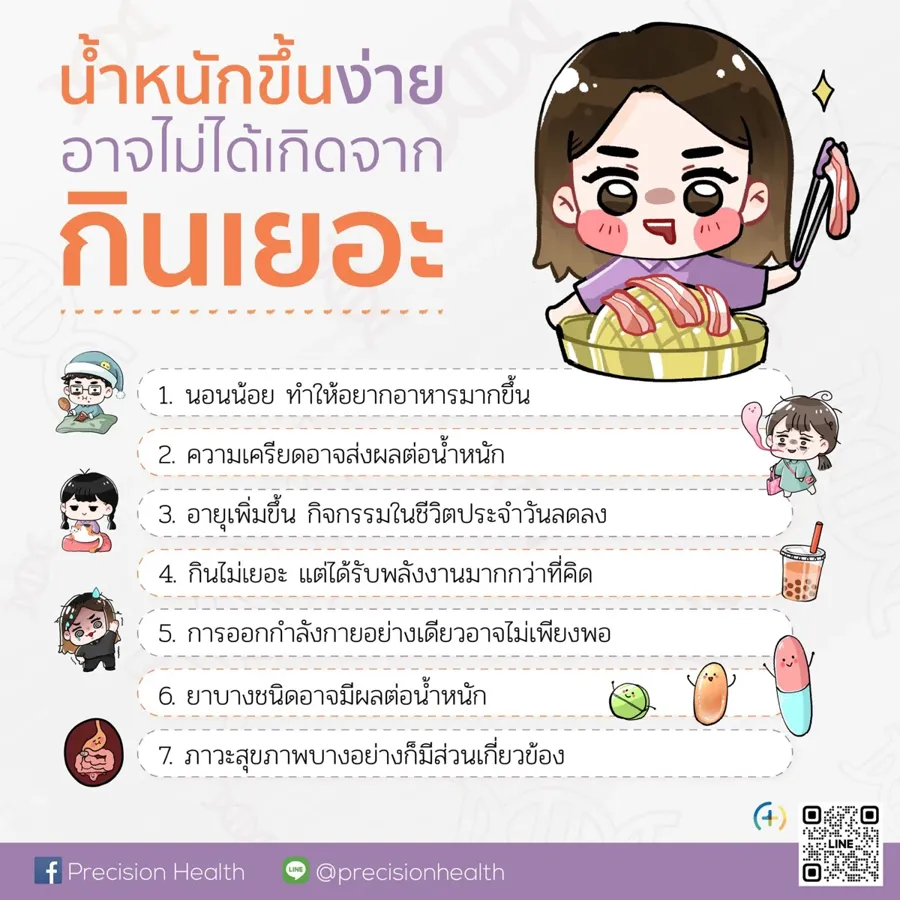
1. Not Getting Enough Sleep Can Increase Appetite
Insufficient sleep can disrupt hormones involved in hunger and fullness, making you feel hungrier and more likely to choose high-calorie foods.
Lack of sleep can also cause fatigue, which may reduce physical activity and lead to lower overall energy expenditure.
2. Stress Can Affect Your Weight
When you are under stress, changes in hormones and eating behaviors can occur.
Some people may eat more, particularly foods high in sugar, fat, or calories. Others may develop irregular eating habits.
If these patterns continue over time, they may contribute to weight gain.
3. Getting Older While Becoming Less Active
As we age, muscle mass tends to decrease, especially if we do not exercise to maintain it.
With less muscle mass, the body may use less energy. Combined with reduced daily movement, this can alter the balance between energy intake and expenditure—even when you feel like you are “eating the same as before.”
4. You May Not Eat a Lot, but Still Consume More Calories Than You Realize
Some foods and drinks may be small in portion but high in calories, such as:
- Sugar-sweetened beverages
- Coffee or milk tea with added sugar and cream
- Desserts and baked goods
- Fried foods and snacks
Calories from drinks and small snacks throughout the day can add up without you realizing it.
5. Exercise Alone May Not Be Enough
Many people start exercising to manage their weight but overlook the importance of energy intake from food.
In addition, after exercising, you may feel more tired and unintentionally reduce other daily activities—for example, walking less or sitting more.
As a result, your total daily energy expenditure may not increase as much as expected.
6. Certain Medications May Affect Body Weight
Some medications may be associated with weight gain, including certain medications used to treat psychiatric conditions, some anti-seizure medications, steroids, and certain medications for diabetes.
If you notice weight gain after starting a medication, do not stop taking it on your own. Talk to your doctor to evaluate the situation and discuss appropriate alternatives if necessary.
7. Certain Health Conditions May Also Play a Role
In some cases, unexplained weight gain may be associated with underlying health conditions, such as **an underactive thyroid (hypothyroidism)** or other conditions that affect metabolism and the body’s balance.
If you experience persistent or rapid weight gain, especially together with other symptoms such as fatigue, increased sensitivity to cold, swelling, or unusual changes in your body, you should consult a doctor.
Weight Gain Doesn’t Always Mean “You’re Eating Too Much”
Healthy weight management should not focus only on:
“I need to eat less.”
Instead, consider the bigger picture:
Diet + Sleep + Stress + Physical Activity + Age + Medications + Overall Health
If your weight changes without an obvious reason, an appropriate health assessment may help identify the factors contributing to the change.
Because taking care of your weight is not about blaming yourself. It’s about understanding your body better.