Precision Health Co., Ltd.
ยาลดไขมันในเลือด รู้ไว้ใช้ยาอย่างมีประสิทธิภาพ
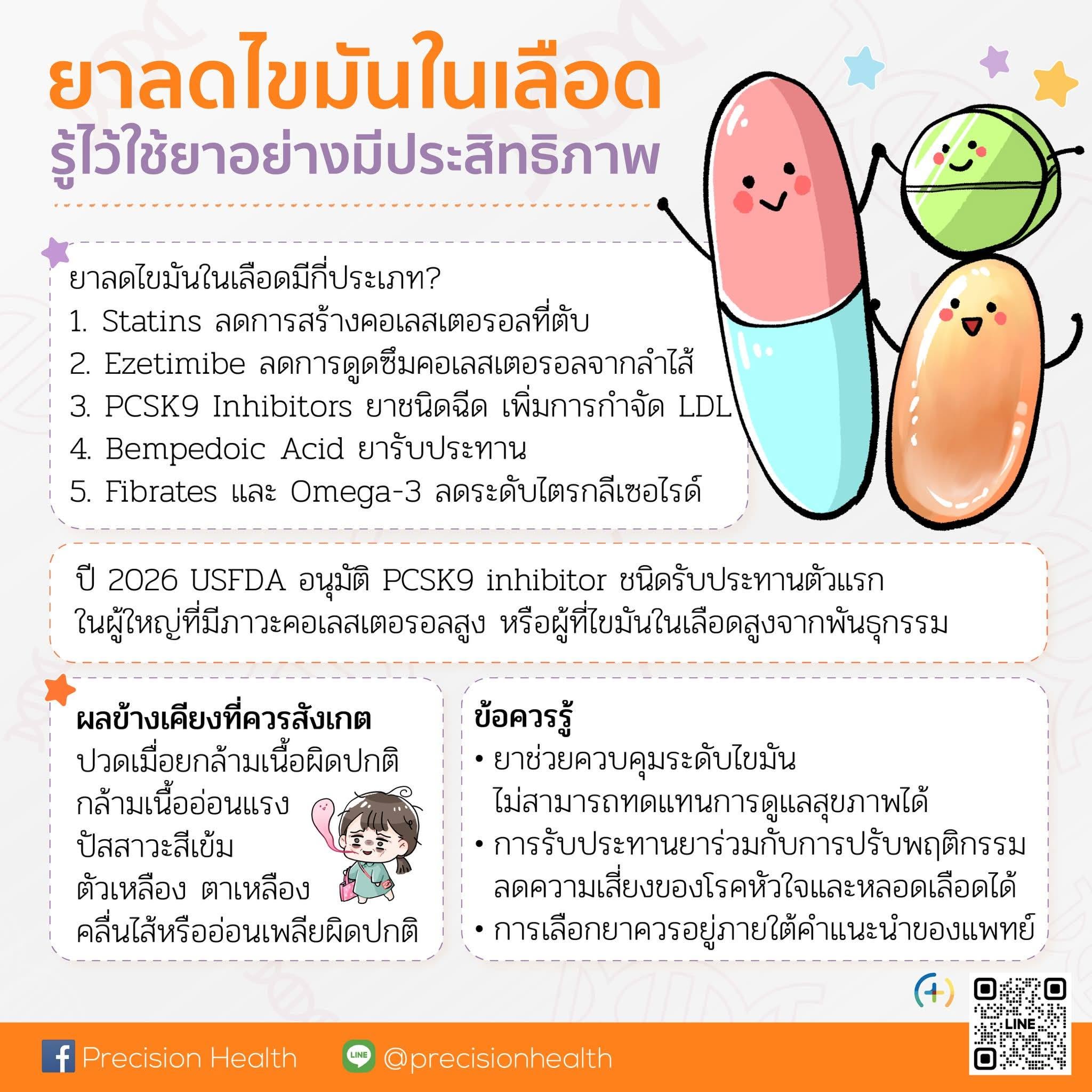
ยาลดไขมันในเลือด รู้ไว้ใช้ยาอย่างมีประสิทธิภาพ
การใช้ ยาลดไขมันในเลือด ร่วมกับการปรับเปลี่ยนพฤติกรรมสุขภาพ จะช่วยลดระดับไขมัน LDL (ไขมันไม่ดี) และลดความเสี่ยงของโรคหัวใจและหลอดเลือดได้อย่างมีประสิทธิภาพ
ยาลดไขมันในเลือดมีกี่ประเภท?
1. Statins เป็นยาที่แพทย์นิยมใช้เป็นอันดับแรก ช่วยลดการสร้างคอเลสเตอรอลที่ตับ และลดระดับ LDL ได้อย่างมีประสิทธิภาพ พร้อมทั้งมีหลักฐานว่าช่วยลดความเสี่ยงของโรคหัวใจและหลอดเลือด
2. Ezetimibe ออกฤทธิ์ลดการดูดซึมคอเลสเตอรอลจากลำไส้ มักใช้ร่วมกับ Statins เมื่อยังควบคุมระดับ LDL ได้ไม่ถึงเป้าหมาย
3. PCSK9 Inhibitors เป็นยาชนิดฉีด ช่วยเพิ่มการกำจัด LDL ออกจากกระแสเลือด เหมาะสำหรับผู้ที่มีความเสี่ยงสูงหรือไม่สามารถควบคุมระดับไขมันได้ด้วยยารับประทาน
4. Bempedoic Acid ยารับประทานอีกทางเลือกหนึ่งสำหรับผู้ที่ไม่สามารถใช้ Statins ได้ หรือใช้ร่วมกับยาอื่นเพื่อลด LDL เพิ่มเติม
5. Fibrates และ Omega-3 เน้นลดระดับไตรกลีเซอไรด์ เหมาะสำหรับผู้ที่มีไตรกลีเซอไรด์สูงมาก
- ในปี 2026 FDA สหรัฐอเมริกาได้อนุมัติ PCSK9 inhibitor รูปแบบยาเป็นชนิดเม็ด รับประทานวันละ 1 ครั้ง (Enlicitide) ซึ่งเป็น PCSK9 inhibitor ชนิดรับประทานตัวแรก ช่วยเพิ่มทางเลือกให้ผู้ป่วยที่ไม่สะดวกใช้ยาฉีด สำหรับใช้ร่วมกับการควบคุมอาหารและการออกกำลังกาย เพื่อลดระดับไขมันคอเลสเตอรอลชนิดความหนาแน่นต่ำ (LDL-C) ในผู้ใหญ่ที่มีภาวะคอเลสเตอรอลสูง หรือผู้ที่มีภาวะไขมันในเลือดสูงจากพันธุกรรม (Heterozygous Familial Hypercholesterolemia – HeFH)
ใช้ยาอย่างไรให้ได้ผลดีที่สุด
- รับประทานยาอย่างสม่ำเสมอ ตามแพทย์สั่ง
- ไม่หยุดยาเอง แม้ว่าผลเลือดจะดีขึ้นแล้ว
- ควบคุมอาหาร ลดไขมันอิ่มตัวและไขมันทรานส์
- ออกกำลังกายอย่างน้อย 150 นาทีต่อสัปดาห์
- งดสูบบุหรี่ และจำกัดการดื่มแอลกอฮอล์
- ตรวจระดับไขมันและติดตามผลการรักษาตามนัด
หากลืมรับประทานยา ควรทำอย่างไร?
- หากนึกได้ภายในเวลาไม่นาน ให้รับประทานทันที
- หากใกล้ถึงเวลารับประทานมื้อถัดไป ให้ข้ามมื้อที่ลืม และรับประทานตามเวลาปกติ
- ไม่ควรเพิ่มขนาดยาเป็น 2 เท่า เพื่อชดเชยยาที่ลืม
ผลข้างเคียงที่ควรสังเกต
แม้ยาลดไขมันส่วนใหญ่จะมีความปลอดภัย แต่ควรสังเกตอาการต่อไปนี้
- ปวดเมื่อยกล้ามเนื้อผิดปกติ
- กล้ามเนื้ออ่อนแรง
- ปัสสาวะสีเข้ม
- ตัวเหลือง ตาเหลือง
- คลื่นไส้หรืออ่อนเพลียผิดปกติ
หากมีอาการดังกล่าว ควรรีบพบแพทย์หรือเภสัชกรทันที
**ข้อควรรู้**
- ยาลดไขมันช่วย "ควบคุม" ระดับไขมัน แต่ไม่สามารถทดแทนการดูแลสุขภาพได้
- การรับประทานยาอย่างต่อเนื่องร่วมกับการปรับพฤติกรรม จะช่วยลดความเสี่ยงของโรคหัวใจและหลอดเลือดได้อย่างมีประสิทธิภาพ
- การเลือกชนิดและขนาดยาควรอยู่ภายใต้คำแนะนำของแพทย์ ไม่ควรซื้อยามารับประทานเอง
สุขภาพหัวใจที่ดี เริ่มต้นจากการควบคุมระดับไขมันในเลือด และใช้ยาอย่างถูกต้องตามคำแนะนำของแพทย์
Cholesterol-Lowering Medications: How to Use Them Effectively
Taking cholesterol-lowering medications together with healthy lifestyle modifications is an effective way to reduce low-density lipoprotein cholesterol (LDL-C), or "bad cholesterol," and lower the risk of cardiovascular disease.
What Types of Cholesterol-Lowering Medications Are Available?
1. Statins
Statins are the first-line treatment for lowering cholesterol. They work by reducing cholesterol production in the liver, effectively lowering LDL-C levels. Extensive clinical evidence has shown that statins significantly reduce the risk of cardiovascular disease.
2. Ezetimibe
Ezetimibe works by reducing the absorption of cholesterol from the intestine. It is commonly prescribed in combination with statins when LDL-C levels remain above the recommended treatment target.
3. PCSK9 Inhibitors
PCSK9 inhibitors are injectable medications that increase the liver's ability to remove LDL-C from the bloodstream. They are recommended for patients at high cardiovascular risk or for those whose cholesterol levels cannot be adequately controlled with oral medications alone.
4. Bempedoic Acid
Bempedoic acid is an oral medication that serves as an alternative for patients who are unable to tolerate statins or who require additional LDL-C reduction in combination with other lipid-lowering therapies.
5. Fibrates and Omega-3 Fatty Acids
Fibrates and omega-3 fatty acids primarily lower triglyceride levels and are particularly beneficial for patients with severe hypertriglyceridemia.
New Treatment Innovation
In 2026, the U.S. Food and Drug Administration (FDA) approved enlicitide, the first oral PCSK9 inhibitor, taken once daily. This new treatment offers an alternative for patients who prefer not to use injectable medications. When used in combination with a healthy diet and regular exercise, enlicitide helps lower low-density lipoprotein cholesterol (LDL-C) in adults with primary hypercholesterolemia or heterozygous familial hypercholesterolemia (HeFH).
How to Get the Best Results from Your Medication
- Take your medication regularly and exactly as prescribed by your physician.
- Do not stop taking your medication without consulting your doctor, even if your cholesterol levels have improved.
- Follow a heart-healthy diet by reducing saturated fats and trans fats.
- Engage in at least 150 minutes of moderate-intensity physical activity per week.
- Avoid smoking and limit alcohol consumption.
- Have your cholesterol levels checked regularly and attend all follow-up appointments.
What Should You Do If You Miss a Dose?
- If you remember shortly after your scheduled dose, take it as soon as possible.
- If it is almost time for your next scheduled dose, skip the missed dose and continue with your regular dosing schedule.
- Do not take a double dose to make up for a missed dose.
Possible Side Effects to Watch For
Although most cholesterol-lowering medications are generally safe and well tolerated, you should contact your healthcare provider if you experience any of the following symptoms:
- Unusual muscle pain or soreness
- Muscle weakness
- Dark-colored urine
- Yellowing of the skin or eyes (jaundice)
- Persistent nausea or unusual fatigue
If any of these symptoms occur, seek medical advice from your physician or pharmacist promptly.
Important Things to Know
- Cholesterol-lowering medications help control cholesterol levels, but they cannot replace a healthy lifestyle.
- Taking your medication consistently while maintaining healthy lifestyle habits can significantly reduce the risk of cardiovascular disease.
- The type and dosage of cholesterol-lowering medication should always be determined by a healthcare professional. Do not self-medicate or start treatment without medical advice.
A healthy heart begins with maintaining healthy cholesterol levels and taking your medication exactly as prescribed by your healthcare provider.