Precision Health Co., Ltd.
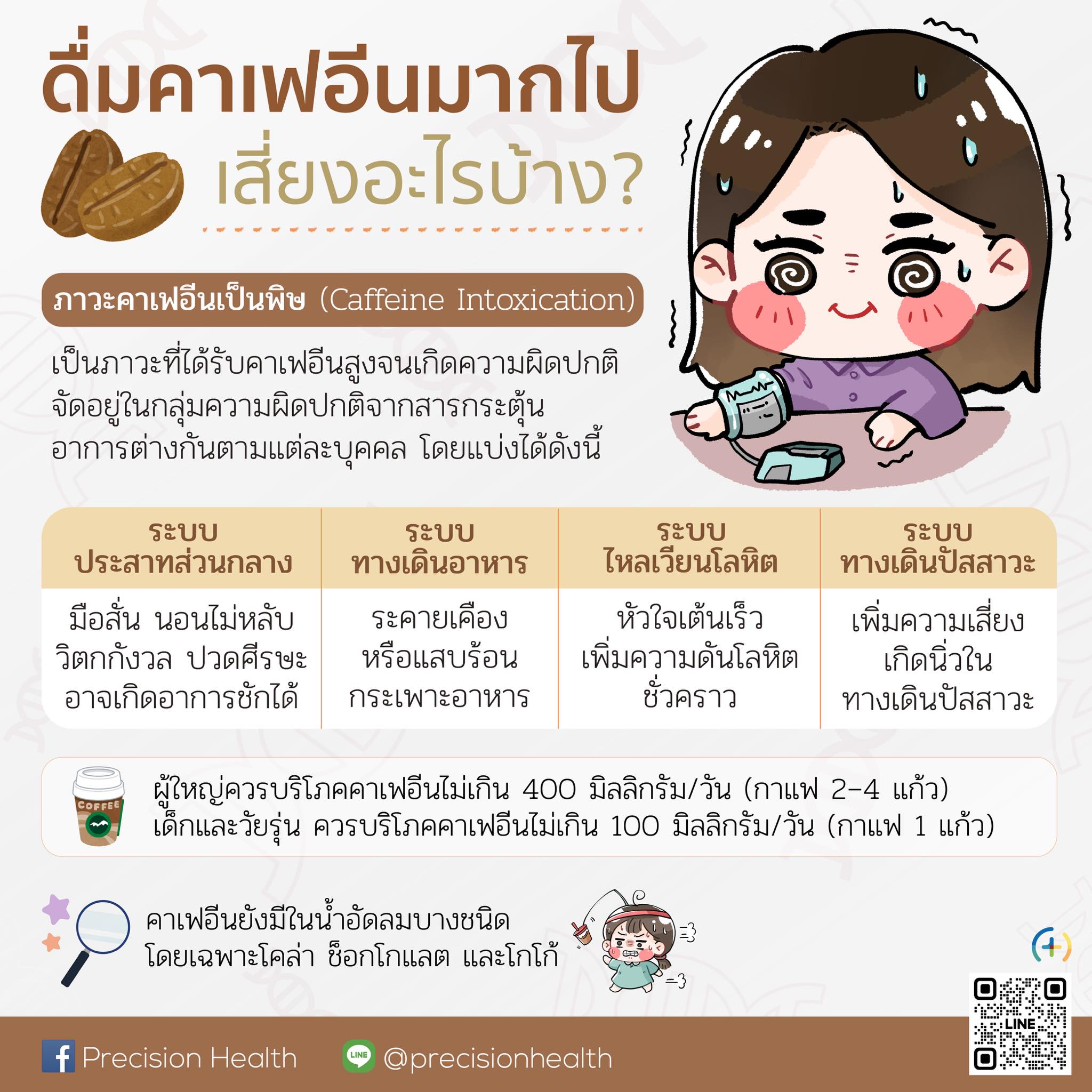
ดื่มคาเฟอีนมากไป เสี่ยงอะไรบ้าง?
ดื่มคาเฟอีนมากไป เสี่ยงอะไรบ้าง?
การดื่มคาเฟอีนมากเกินไปสามารถนำไปสู่ผลข้างเคียงที่หลากหลาย ซึ่งอาจส่งผลกระทบต่อทั้งสุขภาพกายและจิตใจ คาเฟอีนเป็นสารกระตุ้นที่พบในเครื่องดื่มหลายชนิด เช่น กาแฟ ชา และเครื่องดื่มชูกำลัง แม้ว่าจะมีประโยชน์ในการเพิ่มความตื่นตัวและสมาธิ แต่การบริโภคในปริมาณมากเกินไปอาจก่อให้เกิดอันตรายได้
ภาวะคาเฟอีนเป็นพิษ (Caffeine Intoxication)
ภาวะคาเฟอีนเป็นพิษ คือภาวะที่ร่างกายได้รับคาเฟอีนในปริมาณสูงเกินไป จนก่อให้เกิดความผิดปกติทั้งทางร่างกายและจิตใจ โดยในทางการแพทย์จัดอยู่ในกลุ่มความผิดปกติจากสารกระตุ้น (stimulant-related disorders) อาการของภาวะคาเฟอีนเป็นพิษอาจแตกต่างกันไปตามปริมาณที่ได้รับและความไวของแต่ละบุคคล โดยสามารถแบ่งได้ดังนี้
1. ระบบประสาทส่วนกลาง
คาเฟอีนมีฤทธิ์กระตุ้นระบบประสาท ทำให้เกิดอาการมือสั่น นอนไม่หลับ วิตกกังวล และปวดศีรษะ ในบางรายอาจรุนแรงจนเกิดอาการชักได้
2. ระบบทางเดินอาหาร
คาเฟอีนกระตุ้นการหลั่งกรดและน้ำย่อยในกระเพาะอาหาร ส่งผลให้เกิดอาการระคายเคืองหรือแสบร้อน โดยเฉพาะในผู้ที่มีโรคแผลในกระเพาะอาหาร หรือเกี่ยวข้องกับโรคกรดไหลย้อน
3. ระบบไหลเวียนโลหิต
คาเฟอีนกระตุ้นการทำงานของหัวใจ ทำให้หัวใจเต้นเร็วและเพิ่มความดันโลหิตชั่วคราว โดยเฉพาะในผู้ที่ไม่คุ้นเคยกับคาเฟอีน หรือผู้ที่มีภาวะความดันโลหิตสูงอาจเพิ่มความเสี่ยงต่อโรคหัวใจ และหลอดเลือด
4.ระบบทางเดินปัสสาวะ
คาเฟอีนมีฤทธิ์ขับปัสสาวะ โดยลดการดูดกลับน้ำที่ไต ทำให้ปัสสาวะบ่อยขึ้น และอาจทำให้แคลเซียมถูกขับออกมากขึ้น หากอยู่ในสภาวะที่เหมาะสม อาจเพิ่มความเสี่ยงต่อการเกิดนิ่วในทางเดินปัสสาวะ รวมถึงส่งผลต่อการทำงานของไตในระยะยาว
การบริโภคคาเฟอีนในปริมาณที่เหมาะสม
- สำหรับผู้ใหญ่ ควรบริโภคคาเฟอีนไม่เกิน 400 มิลลิกรัมต่อวัน (ประมาณกาแฟ 2–4 แก้ว) การได้รับมากเกินไปอาจทำให้เกิดผลข้างเคียง เช่น หัวใจเต้นเร็ว หงุดหงิด นอนไม่หลับ และคลื่นไส้
- ในเด็กและวัยรุ่น ควรจำกัดการบริโภคคาเฟอีนไม่เกิน 100 มิลลิกรัมต่อวัน (ประมาณ 1 แก้วกาแฟ) เนื่องจากการได้รับคาเฟอีนมากเกินไปอาจส่งผลต่อการเจริญเติบโต การพัฒนาของร่างกาย และรบกวนการนอนหลับ
คาเฟอีนแม้จะช่วยกระตุ้นความตื่นตัว แต่หากบริโภคมากเกินไปอาจส่งผลกระทบต่อหลายระบบของร่างกาย ทั้งระบบประสาท หัวใจ ทางเดินอาหาร และไต จนอาจนำไปสู่ภาวะ Caffeine intoxication ได้
ดังนั้น การบริโภคคาเฟอีนในปริมาณที่เหมาะสมและพอดี จึงเป็นสิ่งสำคัญในการป้องกันผลกระทบต่อสุขภาพในระยะยาว
Tip: อย่าลืมว่าคาเฟอีนไม่ได้มีแค่ในกาแฟ ชา และเครื่องดื่มชูกำลังเท่านั้น แต่คาเฟอีนยังมีในน้ำอัดลมบางชนิด โดยเฉพาะโคล่า ช็อกโกแลต (ยิ่งดาร์กช็อกโกแลต คาเฟอีนยิ่งสูง) และในโกโก้อีกด้วย
What are the risks of consuming too much caffeine?
Excessive caffeine intake can lead to a variety of side effects, affecting both physical and mental health. Caffeine is a stimulant found in many beverages such as coffee, tea, and energy drinks. While it can enhance alertness and concentration, consuming it in excessive amounts may be harmful.
Caffeine Intoxication
Caffeine intoxication occurs when the body receives an excessive amount of caffeine, leading to abnormalities in both physical and psychological functions. Medically, it is classified under stimulant-related disorders. Symptoms may vary depending on the amount consumed and individual sensitivity, and can be categorized as follows:
1. Central Nervous System
Caffeine stimulates the nervous system, which may cause tremors, insomnia, anxiety, and headaches. In severe cases, it may even lead to seizures.
2. Gastrointestinal System
Caffeine increases the secretion of gastric acid and digestive fluids, which can cause irritation or a burning sensation, especially in individuals with peptic ulcers or gastroesophageal reflux disease (GERD).
3. Cardiovascular System
Caffeine stimulates heart activity, leading to increased heart rate and temporary elevation in blood pressure. In individuals who are sensitive to caffeine or have hypertension, this may increase the risk of cardiovascular diseases.
4. Urinary System
Caffeine has a diuretic effect by reducing water reabsorption in the kidneys, resulting in more frequent urination. It may also increase calcium excretion, which, under certain conditions, could raise the risk of kidney stones and potentially affect long-term kidney function.
Recommended Caffeine Intake
For adults, caffeine intake should not exceed 400 mg per day (approximately 2–4 cups of coffee). Excessive intake may lead to side effects such as rapid heartbeat, irritability, insomnia, and nausea.
For children and adolescents, caffeine intake should be limited to no more than 100 mg per day (about 1 cup of coffee), as excessive consumption may affect growth, development, and sleep quality.
Although caffeine can enhance alertness, excessive consumption may negatively impact multiple body systems—including the nervous system, cardiovascular system, digestive system, and kidneys—and may lead to caffeine intoxication.
Therefore, consuming caffeine in appropriate and moderate amounts is essential for preventing long-term health effects.
Tip: Don’t forget that caffeine is not only found in coffee, tea, and energy drinks. It is also present in certain soft drinks (especially cola), chocolate (with higher levels in dark chocolate), and cocoa.
By adminph
Posted 2026-04-16 00:00:00