Precision Health Co., Ltd.
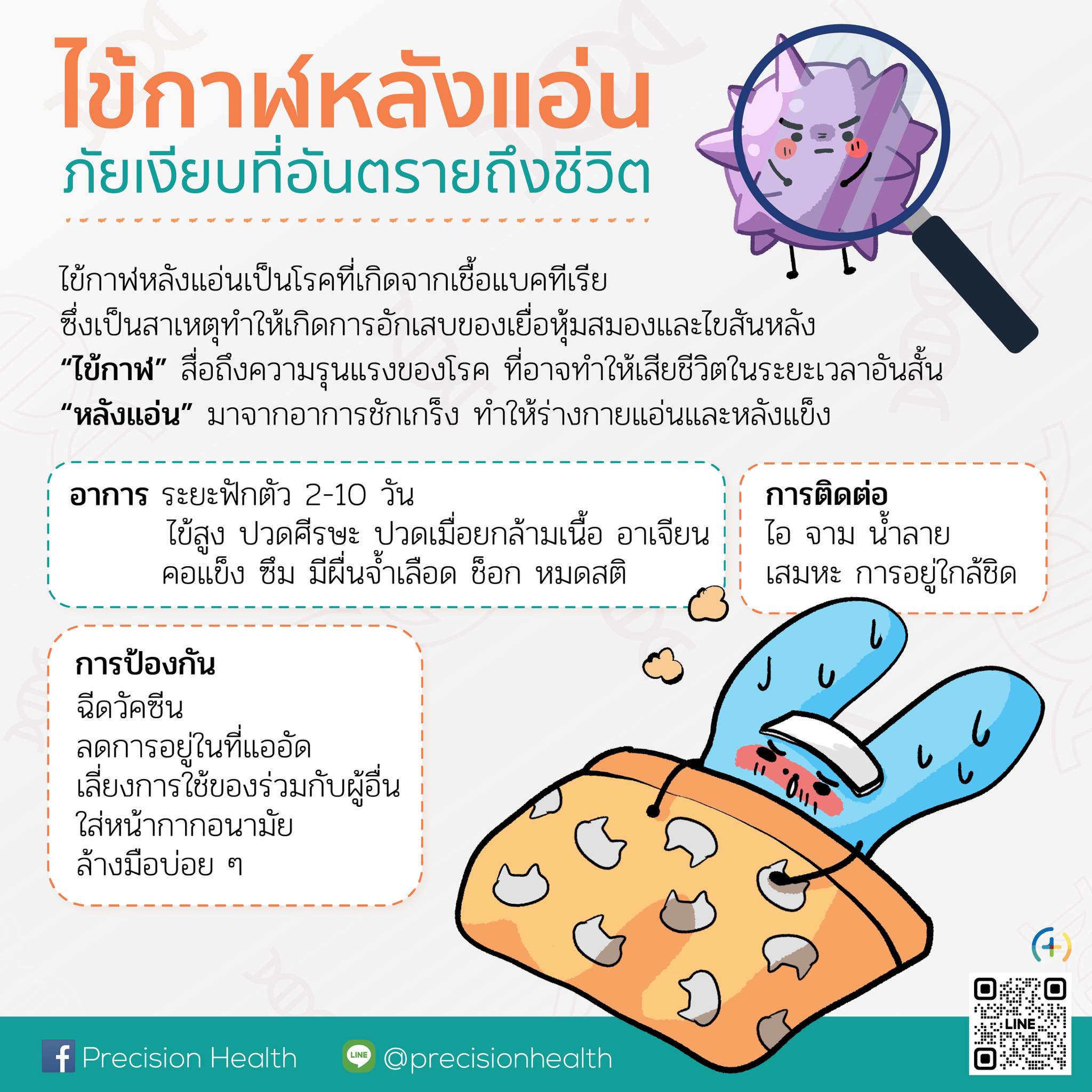
รู้จักไข้กาฬหลังแอ่น ภัยเงียบที่อันตรายถึงชีวิต
รู้จักไข้กาฬหลังแอ่น ภัยเงียบที่อันตรายถึงชีวิต
ไข้กาฬหลังแอ่นเป็นโรคที่เกิดจากเชื้อแบคทีเรีย ซึ่งเป็นสาเหตุทำให้เกิดการอักเสบของเยื่อหุ้มสมองและไขสันหลัง
โรคไข้กาฬหลังแอ่นเกิดในบุคคลทุกวัย ในทางการแพทย์เรียกว่า Meningococcemia (การติดเชื้อในกระแสเลือด) หรือ Meningococcal meningitis (เยื่อหุ้มสมองอักเสบ) ซึ่งเป็นเชื้อที่อยู่ในกลุ่มเดียวกับ Neisseria gonorrhoeae (เชื้อหนองในแท้) แต่ ไม่ใช่โรคติดต่อทางเพศสัมพันธ์ มีความรุนแรงสูงกว่า และมีอัตราการเสียชีวิตสูง
“ไข้กาฬ: สื่อถึงความรุนแรงของโรค ที่อาจทำให้ผู้ป่วยเสียชีวิตได้ในระยะเวลาอันสั้น
“หลังแอ่น”: มาจากอาการชักเกร็ง ทำให้ร่างกายแอ่นและหลังแข็งของผู้ป่วย (ไม่เกี่ยวข้องกับนกนางแอ่น)
อาการของไข้กาฬหลังแอ่น
- ระยะฟักตัว ประมาณ 2-10 วัน โดยเฉลี่ย 3-4 วัน
- เริ่มต้นคล้ายไข้หวัดใหญ่: ไข้สูง ปวดศีรษะ ปวดเมื่อยกล้ามเนื้อ
- อาการอาจทรุดลงอย่างรวดเร็วภายใน 24 ชั่วโมง
เมื่อเกิดเยื่อหุ้มสมองอักเสบ
- ปวดศีรษะรุนแรง
- อาเจียน
- คอแข็ง
- ซึม หรือหมดสติ
เมื่อเกิดการติดเชื้อในกระแสเลือด
- มีผื่นจ้ำเลือดตามร่างกาย
- ภาวะช็อก
- หมดสติ
การติดต่อ
- ไอ/ จาม /น้ำลาย / เสมหะ
- การอยู่ใกล้ชิด เช่น นอนห้องเดียวกัน ใช้ของร่วมกัน
การป้องกัน
- ฉีดวัคซีนป้องกัน (โดยเฉพาะผู้ที่ต้องเดินทาง หรืออยู่ในพื้นที่เสี่ยง)
- ลดการอยู่ในสถานที่แออัด
- หลีกเลี่ยงการใช้ของส่วนตัวร่วมกับผู้อื่น
- ใส่หน้ากากอนามัย และล้างมือบ่อยๆ
หากมีอาการดังกล่าวอย่ามองข้าม ให้รีบไปพบแพทย์ทันที เพื่อความปลอดภัยของตัวเอง และคนรอบข้าง
Meningococcal Disease: A Silent but Life-Threatening Danger
Meningococcal disease is caused by bacteria that lead to inflammation of the membranes surrounding the brain and spinal cord.
This disease can occur in people of all ages. Medically, it is referred to as Meningococcemia (bloodstream infection) or Meningococcal meningitis (inflammation of the meninges). The bacteria belong to the same group as Neisseria gonorrhoeae (the organism that causes gonorrhea), but it is not a sexually transmitted disease. It is more severe and has a higher mortality rate.
- “Kalah” (กาฬ) refers to the severity of the disease, which can lead to death in a short period.
- “Lang Aen” (หลังแอ่น) describes the characteristic arching of the back due to severe muscle spasms (not related to swallows/birds).
Symptoms of Meningococcal Disease
- Incubation period: 2–10 days (average 3–4 days)
- Early symptoms resemble influenza: high fever, headache, muscle aches
- Symptoms may rapidly worsen within 24 hours
When meningitis develops:
- Severe headache
- Vomiting
- Neck stiffness
- Drowsiness or unconsciousness
When bloodstream infection occurs:
- Purplish rash (petechiae)
- Shock
- Loss of consciousness
Transmission
- Coughing, sneezing, saliva, respiratory secretions
- Close contact (e.g., sharing a room or personal items)
Prevention
- Vaccination (especially for travelers or those in high-risk areas)
- Avoid crowded places
- Do not share personal items
- Wear a mask and wash hands frequently
If you experience these symptoms, do not ignore them. Seek medical attention immediately to ensure your safety and protect those around you.