Precision Health Co., Ltd.
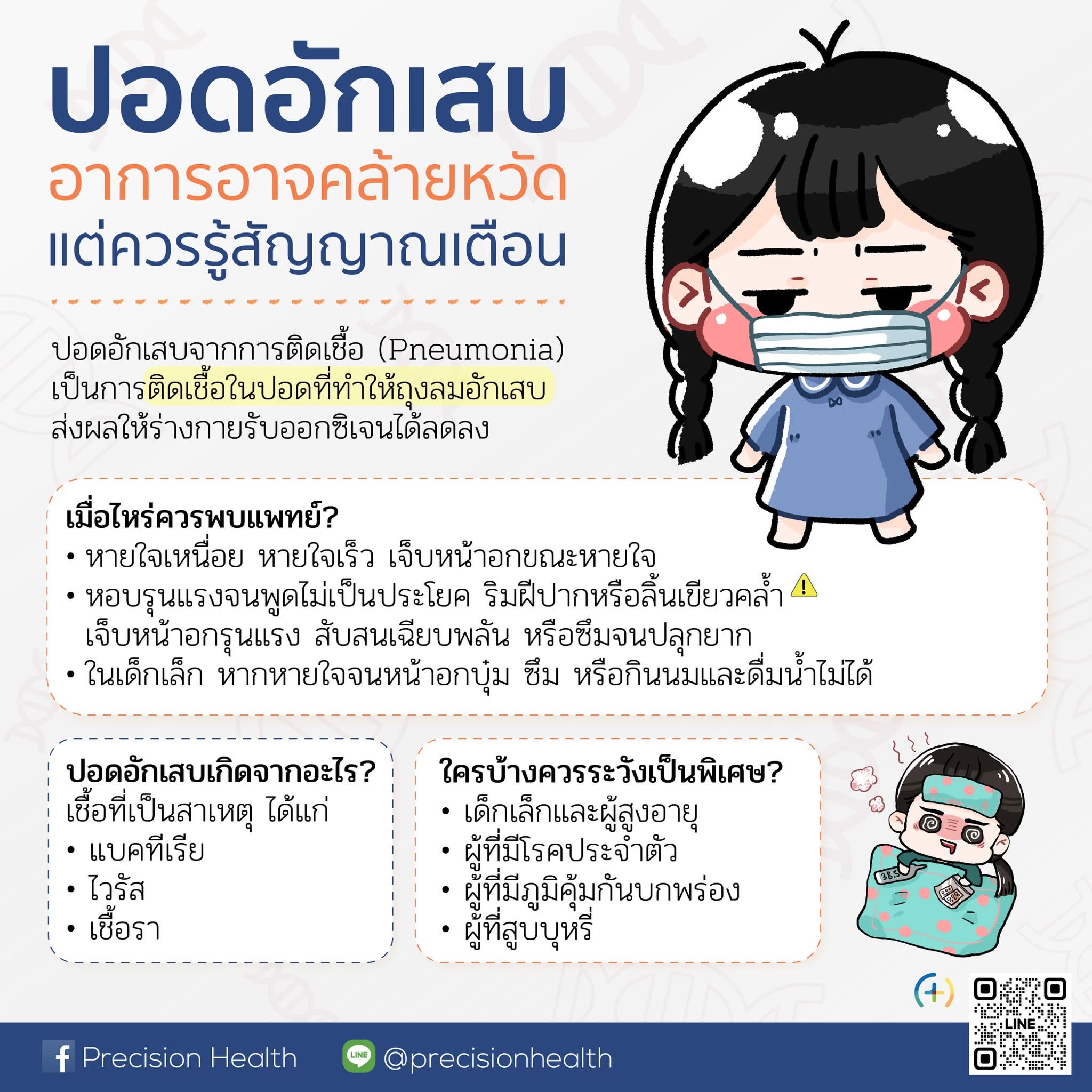
ปอดอักเสบ อาการอาจคล้ายหวัด แต่ควรรู้สัญญาณเตือน
ปอดอักเสบ อาการอาจคล้ายหวัด แต่ควรรู้สัญญาณเตือน
ไอ มีไข้ หรืออ่อนเพลีย อาจพบได้ทั้งในไข้หวัดและโรคปอดอักเสบ จึงไม่ควรตัดสินจากอาการเหล่านี้เพียงอย่างเดียว โดยเฉพาะเมื่อมีหายใจเหนื่อย หายใจเร็ว หรือเจ็บหน้าอกร่วมด้วย
ปอดอักเสบจากการติดเชื้อ (Pneumonia) เป็นการติดเชื้อในปอดที่ทำให้ถุงลมอักเสบ และอาจมีของเหลวหรือหนองสะสม ส่งผลให้ร่างกายรับออกซิเจนได้ลดลง
ปอดอักเสบเกิดจากอะไร?
เชื้อที่เป็นสาเหตุ ได้แก่
• แบคทีเรีย เช่น เชื้อนิวโมคอคคัส (Streptococcus pneumoniae)
• ไวรัส เช่น ไวรัสไข้หวัดใหญ่ ไวรัส RSV และไวรัส SARS-CoV-2 ซึ่งก่อโรค COVID-19
• เชื้อรา ซึ่งพบน้อยกว่า และพบได้มากขึ้นในผู้ที่มีภูมิคุ้มกันบกพร่อง
บางรายอาจเกิดปอดอักเสบหลังสำลักอาหาร น้ำลาย หรืออาเจียนลงปอด
อาการแบบไหนที่ควรสังเกต?
• มีไข้ หนาวสั่น
• ไอแห้งหรือไอมีเสมหะ
• เจ็บหน้าอก โดยเฉพาะขณะหายใจเข้าลึก ๆ หรือไอ
• หายใจเหนื่อย หายใจเร็ว หรือหายใจลำบาก
• อ่อนเพลีย เบื่ออาหาร
ไม่จำเป็นต้องมีอาการครบทุกข้อ ผู้สูงอายุหรือผู้ที่มีภูมิคุ้มกันบกพร่องอาจไม่มีไข้ชัดเจน แต่อาจอ่อนแรงหรือสับสนผิดปกติ
ใครบ้างควรระวังเป็นพิเศษ?
• เด็กเล็กและผู้สูงอายุ
• ผู้ที่มีโรคประจำตัว เช่น โรคหัวใจ โรคปอดเรื้อรัง และโรคเบาหวาน
• ผู้ที่มีภูมิคุ้มกันบกพร่อง
• ผู้ที่สูบบุหรี่
เมื่อไหร่ควรพบแพทย์?
หากมีหายใจเหนื่อย หายใจเร็ว เจ็บหน้าอกขณะหายใจ หรืออาการแย่ลง ควรพบแพทย์โดยเร็ว โดยเฉพาะผู้ที่อยู่ในกลุ่มเสี่ยง
หากหอบรุนแรงจนพูดไม่เป็นประโยค ริมฝีปากหรือลิ้นเขียวคล้ำ เจ็บหน้าอกรุนแรง สับสนเฉียบพลัน หรือซึมจนปลุกยาก ให้ไปห้องฉุกเฉินทันที ไม่ต้องรอให้มีอาการครบทุกข้อ
ในเด็กเล็ก หากหายใจจนหน้าอกบุ๋ม ซึม หรือกินนมและดื่มน้ำไม่ได้ ควรรีบไปโรงพยาบาล
หากสงสัยปอดอักเสบ ควรรับการประเมินจากแพทย์ เพื่อวินิจฉัยและเลือกการรักษาที่เหมาะกับสาเหตุและความรุนแรง
Pneumonia: Symptoms May Resemble a Common Cold, but Know the Warning Signs
Coughing, fever, and fatigue can occur with both the common cold and pneumonia. However, these symptoms should not be overlooked, especially when accompanied by shortness of breath, rapid breathing, or chest pain.
Pneumonia is an infection of the lungs that causes inflammation of the air sacs (alveoli). The air sacs may fill with fluid or pus, making it more difficult for the body to receive sufficient oxygen.
What Causes Pneumonia?
Pneumonia can be caused by several types of microorganisms, including:
- Bacteria: Such as _Streptococcus pneumoniae_ (pneumococcus).
- Viruses: Such as influenza virus, Respiratory Syncytial Virus (RSV), and SARS-CoV-2, which causes COVID-19.
- Fungi: Less common, but more likely to affect people with weakened immune systems.
In some cases, pneumonia can also develop when food, saliva, or vomit is accidentally inhaled into the lungs (aspiration pneumonia).
What Symptoms Should You Look Out For?
- Fever and chills
- Dry cough or cough with phlegm
- Chest pain, especially when taking a deep breath or coughing
- Shortness of breath, rapid breathing, or difficulty breathing
- Fatigue and loss of appetite
Not everyone will experience all of these symptoms. Older adults and people with weakened immune systems may not develop a noticeable fever. Instead, they may experience unusual weakness or confusion.
Who Is at Higher Risk?
- Young children and older adults
- People with underlying medical conditions, such as heart disease, chronic lung disease, or diabetes
- People with weakened immune systems
- Smokers
When Should You See a doctor?
If you experience shortness of breath, rapid breathing, chest pain when breathing, or worsening symptoms, seek medical attention promptly, especially if you belong to a high-risk group.
Seek emergency medical care immediately if you experience severe breathlessness that makes it difficult to speak in full sentences, bluish lips or tongue, severe chest pain, sudden confusion, or extreme drowsiness that makes it difficult to wake up. Do not wait for all symptoms to appear.
For young children, seek immediate medical attention if they experience chest indrawing (the chest pulling inward while breathing), unusual drowsiness, or difficulty feeding or drinking.
If pneumonia is suspected, consult a doctor for proper evaluation, diagnosis, and treatment based on the underlying cause and severity of the condition.