Precision Health Co., Ltd.
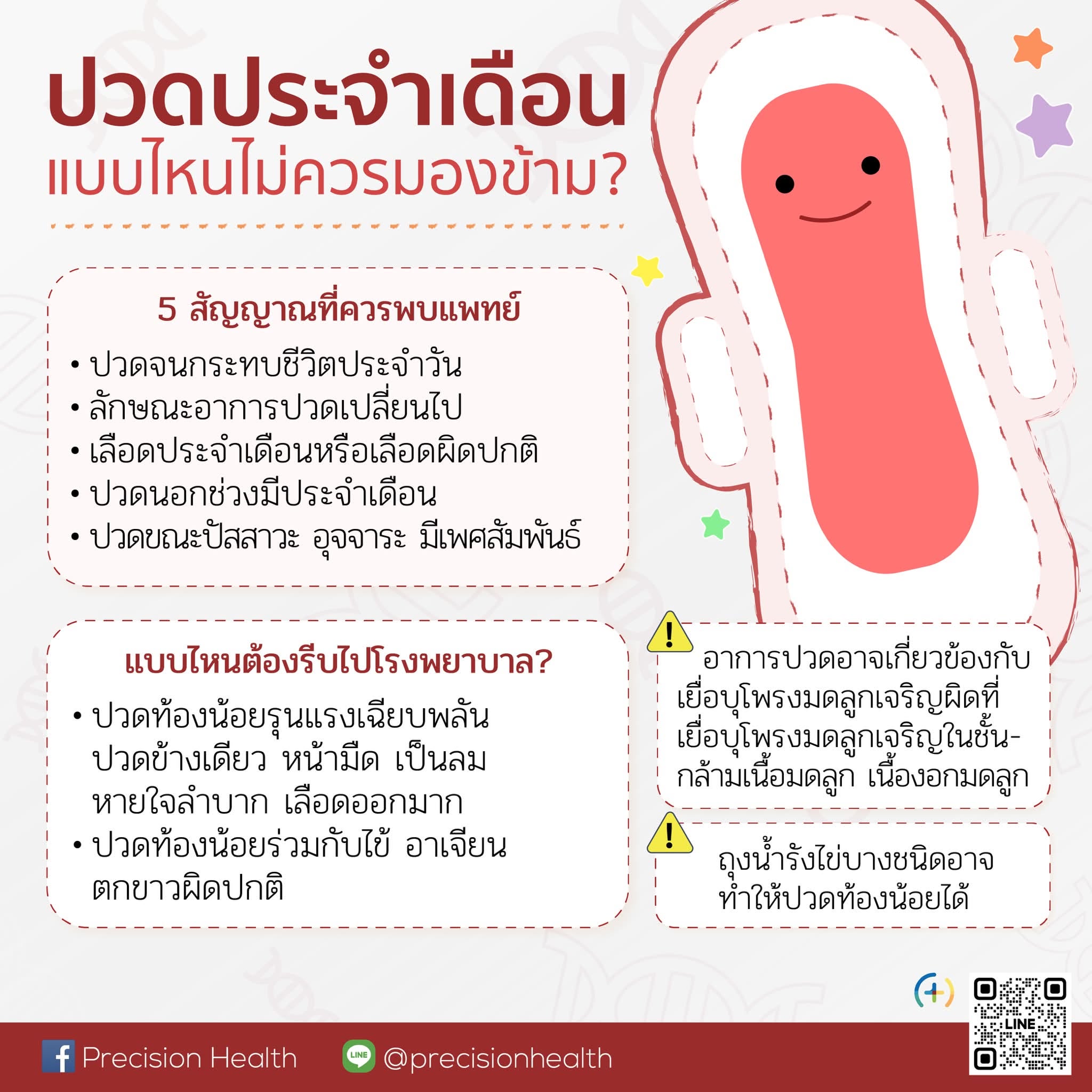
ปวดประจำเดือนแบบไหน ไม่ควรมองข้าม?
ปวดประจำเดือนแบบไหน ไม่ควรมองข้าม?
อาการปวดประจำเดือนพบได้บ่อย มักเป็นอาการปวดบีบหรือปวดหน่วงบริเวณท้องน้อยก่อนหรือช่วงเริ่มมีประจำเดือน และอาจปวดร้าวไปหลังหรือต้นขาร่วมด้วย
อาการปวดประจำเดือนอาจเกิดจากการหดตัวของมดลูกโดยไม่มีโรคแฝง แต่หากปวดจนกระทบชีวิตประจำวัน ปวดมากขึ้นจากเดิม หรือมีอาการผิดปกติร่วมด้วย ควรพบแพทย์เพื่อประเมินสาเหตุ ไม่จำเป็นต้องทนปวดทุกเดือน
5 สัญญาณที่ควรพบแพทย์
1. ปวดจนกระทบชีวิตประจำวัน
ต้องหยุดเรียน หยุดงาน นอนพักจนทำกิจกรรมตามปกติไม่ได้ หรือใช้ยาแก้ปวดอย่างถูกต้องแล้วอาการยังไม่บรรเทา
2. ลักษณะอาการปวดเปลี่ยนไป
ปวดมากขึ้นเรื่อย ๆ ในแต่ละรอบเดือน หรือเริ่มปวดมากทั้งที่ก่อนหน้านี้ไม่เคยมีอาการเช่นนี้
3. มีเลือดประจำเดือนหรือเลือดออกผิดปกติ
เช่น เลือดชุ่มเต็มผ้าอนามัยจนต้องเปลี่ยนทุก 1–2 ชั่วโมง ประจำเดือนนานเกิน 7 วัน มีลิ่มเลือดขนาดใหญ่ หรือมีเลือดออกระหว่างรอบเดือน
4. ปวดนอกช่วงมีประจำเดือน หรือปวดต่อเนื่องหลังประจำเดือนหมด
โดยเฉพาะอาการที่เกิดซ้ำหรือรบกวนการใช้ชีวิต
5. ปวดขณะปัสสาวะ ถ่ายอุจจาระ หรือมีเพศสัมพันธ์
โดยเฉพาะเมื่ออาการเกิดซ้ำหรือชัดเจนขึ้นในช่วงมีประจำเดือน
ดูแลตัวเองเบื้องต้นอย่างไร?
• ประคบอุ่นบริเวณท้องน้อย ใช้ผ้าห่อกระเป๋าน้ำร้อนก่อนวางบนผิวหนัง และหลีกเลี่ยงความร้อนที่มากเกินไป
• พักผ่อนให้เพียงพอ และขยับร่างกายเบา ๆ ตามที่ไหว เช่น เดิน ยืดเหยียด หรือโยคะ ซึ่งอาจช่วยบรรเทาอาการปวดได้
• จดบันทึกอาการ ทั้งวันเริ่มและวันสิ้นสุดประจำเดือน ระดับความปวด ปริมาณเลือด อาการร่วม รวมถึงชื่อยาและผลหลังใช้ยา เพื่อประกอบการประเมินของแพทย์
• ใช้ยาแก้ปวดอย่างเหมาะสม ยาต้านการอักเสบที่ไม่ใช่สเตียรอยด์ หรือ NSAIDs เช่น ไอบูโพรเฟน ช่วยลดการสร้างสารพรอสตาแกลนดินที่เกี่ยวข้องกับการหดตัวของมดลูก จึงช่วยบรรเทาปวดประจำเดือนได้ โดยมักได้ผลดีเมื่อเริ่มใช้ตั้งแต่เริ่มปวดหรือเริ่มมีประจำเดือน ควรใช้ตามฉลากหรือคำแนะนำของแพทย์หรือเภสัชกร และไม่ใช้ NSAIDs หลายชนิดร่วมกัน
ผู้ที่มีประวัติแพ้ยากลุ่มนี้ แผลหรือเลือดออกในทางเดินอาหาร โรคไต ใช้ยาต้านการแข็งตัวของเลือด หรืออาจตั้งครรภ์ ควรปรึกษาแพทย์หรือเภสัชกรก่อนใช้
• พบแพทย์หากอาการรบกวนชีวิตประจำวัน หากปวดรุนแรงกว่าปกติและยาไม่ช่วย ควรรับการประเมินโดยเร็ว
อาการแบบไหนต้องรีบไปโรงพยาบาล?
- ปวดท้องน้อยรุนแรงเฉียบพลัน โดยเฉพาะปวดข้างเดียว หรือมีอาการหน้ามืด เป็นลม หายใจลำบาก หรือเลือดออกมากร่วมด้วย
- ปวดท้องน้อยร่วมกับไข้ อาเจียน หรือตกขาวผิดปกติ ควรพบแพทย์โดยเร็ว
หากประจำเดือนขาดหรือมีโอกาสตั้งครรภ์ แล้วมีอาการปวดท้องน้อยหรือเลือดออกทางช่องคลอด ควรรีบรับการประเมิน เพราะเลือดที่ออกอาจไม่ใช่ประจำเดือน และอาจเกี่ยวข้องกับภาวะตั้งครรภ์นอกมดลูก
ปวดประจำเดือนมาก อาจมีสาเหตุที่รักษาได้
อาการปวดประจำเดือนอาจเกี่ยวข้องกับเยื่อบุโพรงมดลูกเจริญผิดที่ เยื่อบุโพรงมดลูกเจริญในชั้นกล้ามเนื้อมดลูก เนื้องอกมดลูก หรืออุ้งเชิงกรานอักเสบ ส่วนถุงน้ำรังไข่บางชนิดอาจทำให้ปวดท้องน้อยได้ แต่อาการปวดไม่ได้จำกัดเฉพาะช่วงมีประจำเดือน
อาการเหล่านี้ไม่ได้ยืนยันว่าเป็นโรคใดโรคหนึ่ง แพทย์จะพิจารณาจากประวัติ การตรวจ และอาจตรวจเพิ่มเติม เช่น อัลตราซาวนด์ ตามความเหมาะสม
อย่าปล่อยให้ความเจ็บปวดเป็นเรื่องที่ต้องทนทุกเดือน หากอาการกระทบคุณภาพชีวิต ควรพบแพทย์หรือสูตินรีแพทย์เพื่อหาสาเหตุและรับการดูแลที่เหมาะสม
What Type of Menstrual Pain Should You Not Ignore?
Menstrual cramps are common and are often described as cramping or a dull ache in the lower abdomen before or at the beginning of menstruation. The pain may also radiate to the lower back or thighs.
Menstrual pain can result from uterine contractions without any underlying medical condition. However, if the pain interferes with daily activities, becomes progressively worse, or is accompanied by unusual symptoms, you should see a doctor to determine the cause. You do not have to endure severe pain every month.
5 Warning Signs That You Should See a doctor
1. Pain that interferes with daily life: You have to miss school or work, lie down because you cannot carry out normal activities, or continue to experience pain despite taking pain medication appropriately.
2. Changes in the pattern of pain: Your menstrual pain becomes increasingly severe with each cycle, or you begin experiencing significant pain despite not having had similar symptoms before.
3. Heavy or abnormal menstrual bleeding: Examples include soaking through a sanitary pad every 1–2 hours, having periods that last longer than 7 days, passing large blood clots, or experiencing bleeding between periods.
4. Pain outside your menstrual period or pain that continues after your period ends: This is particularly concerning when the pain recurs or interferes with your daily activities.
5. Pain during urination, bowel movements, or sexual intercourse: This is especially important when the symptoms recur or become more pronounced during menstruation.
How Can You Manage Menstrual Pain at Home?
- Apply heat to your lower abdomen. Use a warm compress or a hot water bottle wrapped in a towel, and avoid excessive heat to prevent burns.
- Get enough rest and engage in gentle physical activity. Activities such as walking, stretching, or yoga, as tolerated, may help relieve menstrual pain.
- Keep a menstrual symptom diary. Record the start and end dates of your period, pain intensity, menstrual flow, associated symptoms, medications taken, and how well they work.
This information can help your doctor assess your condition.
- Use pain relief medication appropriately. Nonsteroidal anti-inflammatory drugs (NSAIDs), such as ibuprofen, help reduce the production of prostaglandins, substances involved in uterine contractions. This can help relieve menstrual cramps. These medications often work best when taken at the onset of pain or menstruation. Follow the product label or your doctor’s or pharmacist’s advice, and do not take multiple NSAIDs together.
If you have a history of allergies to these medications, stomach ulcers or gastrointestinal bleeding, kidney disease, take anticoagulants (blood thinners), or may be pregnant, consult a doctor or pharmacist before using them.
- Seek medical attention if the pain affects your daily life. If the pain is more severe than usual and medication does not help, seek prompt medical evaluation.
When Should You Seek Emergency Medical Care?
- Sudden, severe lower abdominal pain, particularly one-sided pain, or pain accompanied by dizziness, fainting, difficulty breathing, or heavy bleeding.
- Lower abdominal pain accompanied by fever, vomiting, or abnormal vaginal discharge. These symptoms warrant prompt medical attention.
If your period is late or you could be pregnant and experience lower abdominal pain or vaginal bleeding, seek urgent medical evaluation. The bleeding may not be a normal menstrual period and could be associated with an ectopic pregnancy, a potentially life-threatening condition in which a pregnancy develops outside the uterus.
Severe Menstrual Pain May Be Caused by Treatable Conditions
Severe menstrual pain may be associated with conditions such as:
- Endometriosis: A condition in which tissue similar to the lining of the uterus grows outside the uterus.
- Adenomyosis: A condition in which tissue similar to the uterine lining grows into the muscular wall of the uterus.
- Uterine fibroids: Noncancerous growths in the uterus.
- Pelvic inflammatory disease (PID): An infection of the female reproductive organs.
Certain ovarian cysts can also cause lower abdominal pain, although the pain is not necessarily limited to menstruation.
These symptoms alone cannot confirm any specific diagnosis. Your doctor will assess your medical history and symptoms, perform an examination when appropriate, and may recommend additional investigations, such as an ultrasound, depending on your condition.
Do not let menstrual pain become something you feel you must endure every month. If the pain affects your quality of life, consult a doctor or gynecologist to identify the underlying cause and receive appropriate treatment.
By adminph
Posted 2026-11-05 00:00:00