Precision Health Co., Ltd.
กาฬโรค (Plague): ติดต่ออย่างไร? สังเกตอาการแบบไหนที่ต้องรีบพบแพทย์
กาฬโรค (Plague): ติดต่ออย่างไร? สังเกตอาการแบบไหนที่ต้องรีบพบแพทย์
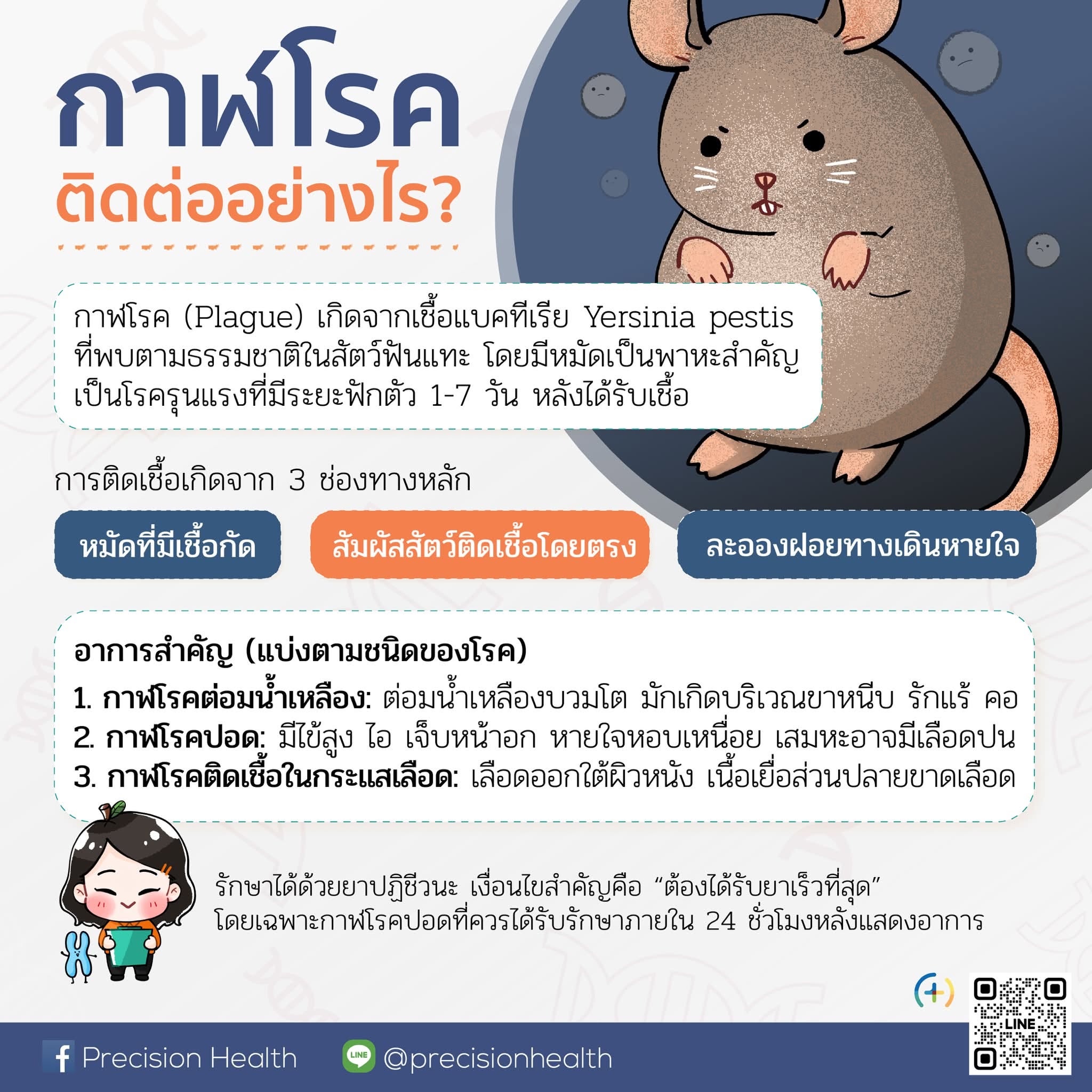
กาฬโรค (Plague) เกิดจากการติดเชื้อแบคทีเรีย Yersinia pestis ที่พบตามธรรมชาติในสัตว์ฟันแทะ (เช่น หนู กระรอก) โดยมี หมัด เป็นพาหะสำคัญ แม้ปัจจุบันจะพบได้ยาก แต่ถือเป็นโรครุนแรงที่มีระยะฟักตัวเร็ว เพียง 1-7 วัน หลังได้รับเชื้อ
กาฬโรคติดต่อได้อย่างไร?
การติดเชื้อเกิดขึ้นได้จาก 3 ช่องทางหลัก:
1. ถูกหมัดที่มีเชื้อกัด: เป็นช่องทางที่พบบ่อยที่สุด เมื่อหมัดกัดสัตว์ป่วยแล้วมากัดคนต่อ
2. สัมผัสสัตว์ติดเชื้อโดยตรง: ผ่านการสัมผัสเลือด เนื้อเยื่อ หรือสารคัดหลั่งของสัตว์ป่วย/สัตว์ที่ตายแล้ว โดยไม่ใช้อุปกรณ์ป้องกัน
3. แพร่ผ่านละอองฝอยทางเดินหายใจ: เกิดจากผู้ป่วย กาฬโรคปอด ไอหรือจามรดในระยะใกล้ชิด ซึ่งเป็นช่องทางเดียวที่แพร่จาก คนสู่คน ได้โดยตรง
อาการสำคัญที่ต้องสังเกต (แบ่งตามชนิดของโรค)
ลักษณะอาการจะขึ้นอยู่กับช่องทางที่เชื้อเข้าสู่ร่างกาย:
1. กาฬโรคต่อมน้ำเหลือง (Bubonic Plague) — พบบ่อยที่สุด
มีไข้สูงฉับพลัน หนาวสั่น ปวดศีรษะ และอ่อนเพลียอย่างมาก
* จุดเด่น: ต่อมน้ำเหลืองบวมโต กดเจ็บอย่างรุนแรง (เรียกว่า Bubo) มักเกิดบริเวณขาหนีบ รักแร้ หรือคอ
2. กาฬโรคปอด (Pneumonic Plague) — รุนแรงและแพร่กระจายเร็วที่สุด
* มีไข้สูง ไอ เจ็บหน้าอก หายใจหอบเหนื่อย
* เสมหะอาจมีเลือดปน
* เป็นชนิดที่อันตรายที่สุด สามารถแพร่กระจายจากคนสู่คนทางอากาศ และอาจเป็นอันตรายถึงชีวิตหากไม่ได้ยาปฏิชีวนะทันท่วงที
3. กาฬโรคติดเชื้อในกระแสเลือด (Septicemic Plague)
* เชื้อเข้าสู่กระแสเลือดโดยตรง หรือพัฒนามาจาก 2 ชนิดแรก
* มีไข้สูง ปวดท้อง ท้องเสีย ช็อก
* เลือดออกใต้ผิวหนัง จนทำให้เนื้อเยื่อส่วนปลาย (เช่น นิ้วมือ นิ้วเท้า) ขาดเลือดและดำเขียว (เน่าเปื่อย)
กาฬโรครักษาได้หรือไม่?
รักษาได้ด้วยยาปฏิชีวนะ เช่น Streptomycin, Gentamicin หรือ Doxycycline แต่เงื่อนไขสำคัญคือ "ต้องได้รับยาเร็วที่สุด" โดยเฉพาะกาฬโรคปอดที่ควรได้รับรักษาภายใน 24 ชั่วโมงหลังเริ่มแสดงอาการ เพื่อลดอัตราการเสียชีวิต ดังนั้น หากมีอาการที่สงสัย โดยเฉพาะหลังจาก สัมผัสสัตว์ป่วย/ตาย หรืออยู่ในพื้นที่ที่มีการระบาด ควรรีบพบแพทย์และแจ้งประวัติการสัมผัสให้ทราบ
แนวทางการป้องกัน
- หลีกเลี่ยงการสัมผัสสัตว์ป่า/สัตว์ฟันแทะ: โดยเฉพาะสัตว์ที่ป่วยหรือตายผิดปกติ
- สวมถุงมือทุกครั้ง: หากมีความจำเป็นต้องสัมผัสสัตว์ หรือจัดการซากสัตว์
- กำจัดและป้องกันหมัด: ดูแลสัตว์เลี้ยงในบ้านให้ปราศจากหมัด และสวมยากันยุง/กันแมลงเมื่อต้องเข้าป่า
- จัดการสุขาภิบาล: เก็บอาหารและขยะในภาชนะที่มิดชิด เพื่อไม่ให้เป็นแหล่งสะสมของหนู
- แจ้งประวัติเสี่ยงแก่แพทย์ทันที: หากมีไข้ร่วมกับประวัติเดินทางไปพื้นที่ระบาด หรือสัมผัสสัตว์ฟันแทะ
สรุป: แม้กาฬโรคจะไม่ใช่โรคที่พบได้ทั่วไปในปัจจุบัน แต่การรู้เท่าทันช่องทางการแพร่เชื้อและสังเกตอาการได้เร็ว จะช่วยให้ได้รับการรักษาที่ทันเวลาและปลอดภัย
Plague: How Is It Transmitted and What Symptoms Require Urgent Medical Attention?
Plague is an infectious disease caused by the bacterium _Yersinia pestis_, which naturally occurs in rodents such as rats and squirrels. Fleas are an important vector for transmission. Although plague is now rare, it is a serious disease with a relatively short incubation period of approximately 1–7 days after exposure.
How Is Plague Transmitted?
There are three main ways people can become infected:
1. Being bitten by an infected flea
This is the most common route of transmission. A flea can become infected after feeding on an infected animal and then transmit the bacteria when it bites a person.
2. Direct contact with an infected animal
Infection can occur through contact with the blood, tissues, or bodily fluids of an infected or dead animal, particularly without appropriate protective equipment.
3. Respiratory droplets
This can occur when a person with pneumonic plague coughs or sneezes at close range. This is the form of plague that can be transmitted directly from person to person.
Key Symptoms to Watch For
Symptoms vary depending on how the bacteria enter the body.
1. Bubonic Plague — The Most Common Form
Common symptoms include:
- Sudden high fever and chills
- Severe headache
- Extreme weakness and fatigue
- Swollen and very painful lymph nodes, known as buboes, usually occurring in the groin, armpits, or neck
2. Pneumonic Plague — Severe and Rapidly Progressive
Symptoms may include:
- High fever
- Cough
- Chest pain
- Shortness of breath or difficulty breathing
- Sputum that may contain blood
Pneumonic plague is particularly dangerous because it can spread from person to person through respiratory droplets and can become life-threatening without prompt antibiotic treatment.
3. Septicemic Plague
This occurs when the bacteria enter the bloodstream, either directly or as a complication of bubonic or pneumonic plague.
Symptoms may include:
- High fever
- Abdominal pain
- Diarrhea
- Shock
- Bleeding under the skin
- Severe damage to tissues, which may cause the fingers, toes, or other extremities to become dark or black due to loss of blood supply
Can Plague Be Treated?
Yes. Plague can be treated with antibiotics, such as streptomycin, gentamicin, or doxycycline. However, early treatment is critical, particularly in cases of pneumonic plague.
If you develop symptoms that may be consistent with plague—especially after contact with a sick or dead animal or travel to an area where plague is occurring—seek medical attention promptly and inform your healthcare provider about your exposure history.
How Can Plague Be Prevented?
- Avoid contact with wild animals and rodents, especially animals that appear sick or are found dead unexpectedly.
- Wear protective gloves if you must handle animals or animal carcasses.
- Prevent and control flea infestations in pets and around the home. Use appropriate insect repellent when entering areas where exposure to fleas may occur.
- Maintain good sanitation: Keep food and garbage in tightly sealed containers to avoid attracting rodents.
- Tell your doctor about any potential exposure: If you develop a fever after traveling to an area where plague occurs or after contact with rodents or other potentially infected animals, inform your healthcare provider immediately.
Although plague is uncommon today, it remains a serious infectious disease. Knowing how it spreads and recognizing the warning signs early can help ensure timely treatment and reduce the risk of serious complications.
By adminph
Posted 2026-10-15 00:00:00