Precision Health Co., Ltd.
เส้นเลือดหัวใจตีบ…ภัยเงียบที่ไม่ทันตั้งตัว
เส้นเลือดหัวใจตีบ…ภัยเงียบที่ไม่ทันตั้งตัว
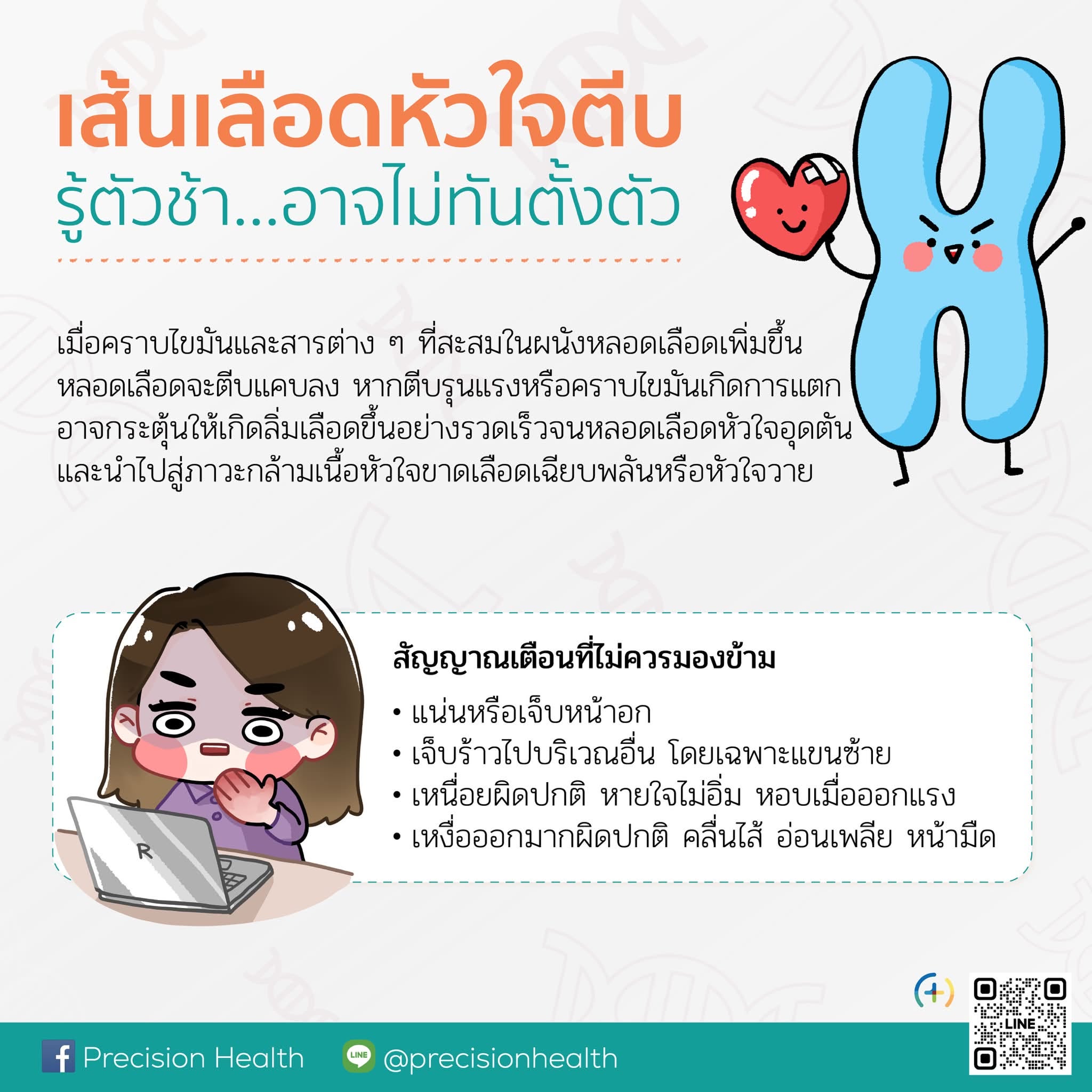
โรคหลอดเลือดหัวใจตีบอาจค่อย ๆ เกิดขึ้นโดยที่เราไม่รู้ตัว เมื่อคราบไขมันและสารต่าง ๆ ที่สะสมในผนังหลอดเลือด (Plaque) เพิ่มขึ้นเรื่อย ๆ หลอดเลือดจะค่อย ๆ ตีบแคบลง ทำให้เลือดและออกซิเจนไปเลี้ยงกล้ามเนื้อหัวใจลดลง
หากหลอดเลือดตีบรุนแรง หรือคราบไขมันเกิดการแตก อาจกระตุ้นให้เกิดลิ่มเลือดขึ้นอย่างรวดเร็ว จนหลอดเลือดหัวใจอุดตันและนำไปสู่ ภาวะกล้ามเนื้อหัวใจขาดเลือดเฉียบพลันหรือหัวใจวาย ซึ่งอาจเป็นอันตรายถึงชีวิตได้
สัญญาณเตือนที่ไม่ควรมองข้าม
- แน่นหรือเจ็บหน้าอก รู้สึกหนัก บีบรัด หรือเหมือนมีของหนักกดทับ โดยเฉพาะขณะออกแรง
- เจ็บร้าวไปบริเวณอื่น อาจร้าวไปที่แขนข้างใดข้างหนึ่ง โดยเฉพาะแขนซ้าย รวมถึงไหล่ คอ กราม หรือหลัง
- เหนื่อยผิดปกติ เหนื่อยง่ายกว่าที่เคย หายใจไม่อิ่ม หรือหอบเมื่อออกแรง
- อาการร่วมอื่น ๆ เหงื่อออกมากผิดปกติ คลื่นไส้ อ่อนเพลีย หน้ามืด หรือรู้สึกผิดปกติอย่างฉับพลัน
อย่ารอให้ “เจ็บหน้าอก” เสมอไป
โดยเฉพาะใน ผู้หญิง ผู้สูงอายุ และผู้ที่เป็นเบาหวาน อาจมีอาการไม่ชัดเจน หรือไม่มีอาการเจ็บหน้าอกแบบที่คุ้นเคย เช่น เหนื่อยง่ายผิดปกติ อ่อนเพลีย จุกหรือแน่นบริเวณลิ้นปี่ คลื่นไส้ หรือหายใจไม่อิ่ม
สาเหตุและปัจจัยเสี่ยง
สาเหตุสำคัญคือ ภาวะหลอดเลือดแดงแข็ง (Atherosclerosis) จากการสะสมของคราบไขมันในผนังหลอดเลือด ทำให้ผนังหลอดเลือดหนาตัวและช่องภายในหลอดเลือดแคบลง
เมื่อคราบไขมันเกิดการแตก อาจทำให้เกิดลิ่มเลือดและอุดตันหลอดเลือดหัวใจอย่างเฉียบพลันได้
ปัจจัยที่เพิ่มความเสี่ยง
- ไขมันในเลือดสูง โดยเฉพาะ LDL-cholesterol
- ความดันโลหิตสูง
- เบาหวานหรือระดับน้ำตาลในเลือดสูง
- สูบบุหรี่ รวมถึงการได้รับควันบุหรี่มือสอง
- น้ำหนักเกินหรือโรคอ้วน และการมีกิจกรรมทางกายน้อย
- รับประทานอาหารที่มี ไขมันอิ่มตัว น้ำตาล และโซเดียมสูง เป็นประจำ
- อายุเพิ่มขึ้น
- มีประวัติครอบครัวเป็นโรคหัวใจและหลอดเลือด
รู้เร็ว ลดความเสี่ยงได้
โรคหลอดเลือดหัวใจอาจดำเนินไปโดยไม่มีอาการชัดเจน การตรวจสุขภาพและประเมินปัจจัยเสี่ยงอย่างสม่ำเสมอจึงมีความสำคัญ โดยเฉพาะผู้ที่มีความเสี่ยงหลายด้าน
การควบคุม ความดันโลหิต ไขมันในเลือด น้ำตาลในเลือด น้ำหนักตัว งดสูบบุหรี่ และออกกำลังกายอย่างเหมาะสม สามารถช่วยลดความเสี่ยงของโรคหัวใจและหลอดเลือดได้
เมื่อไหร่ต้องรีบไปโรงพยาบาล?
หากมี เจ็บหรือแน่นหน้าอกอย่างรุนแรงหรือเกิดขึ้นใหม่ อาการเจ็บร้าว หายใจลำบาก เหงื่อออกมาก หน้ามืด หรืออาการผิดปกติที่สงสัยว่าอาจเป็นภาวะหัวใจขาดเลือด
อย่ารอดูอาการเอง โทร 1669 หรือรีบไปห้องฉุกเฉินทันที
Coronary Artery Disease: A Silent Threat That Can Strike Without Warning
Coronary artery disease (CAD) can develop gradually without noticeable symptoms. As plaque—made up of cholesterol, fat, and other substances—builds up in the artery walls, the coronary arteries gradually become narrowed, reducing blood flow and oxygen supply to the heart muscle.
If the artery becomes severely narrowed or a plaque ruptures, a blood clot may form rapidly, causing a sudden blockage of the coronary artery. This can lead to an acute myocardial infarction (heart attack), which can be life-threatening.
Warning Signs You Should Not Ignore
- Chest pain or pressure: A feeling of heaviness, squeezing, or pressure in the chest, particularly during physical activity.
- Pain that spreads to other areas: Pain may radiate to one or both arms, especially the left arm, as well as the shoulder, neck, jaw, or back.
- Unusual shortness of breath: Becoming unusually tired, experiencing difficulty breathing, or feeling breathless during physical activity.
- Other accompanying symptoms: Excessive sweating, nausea, weakness, dizziness, or a sudden feeling that something is not right.
Don’t Wait for “Chest Pain”
Some people—particularly women, older adults, and people with diabetes—may experience less typical symptoms or may not have the classic chest pain associated with a heart attack.
Symptoms may include unusual fatigue, weakness, discomfort or pressure in the upper abdomen, nausea, or shortness of breath.
Causes and Risk Factors
The main underlying cause is atherosclerosis, a condition in which plaque builds up inside the artery walls, causing the arteries to thicken and their inner passageways to become narrower.
When plaque ruptures, it can trigger the formation of a blood clot, which may suddenly block a coronary artery.
Factors That Increase the Risk
- High blood cholesterol, particularly LDL cholesterol
- High blood pressure
- Diabetes or high blood sugar levels
- Smoking, including exposure to secondhand smoke
- Overweight or obesity and physical inactivity
- Regularly consuming foods high in saturated fat, sugar, and sodium
- Increasing age
- A family history of cardiovascular disease
Know Your Risk Early, Reduce It Early
Coronary artery disease can progress without obvious symptoms. Regular health checkups and assessment of cardiovascular risk factors are therefore important, especially for people with multiple risk factors.
Managing blood pressure, cholesterol, blood sugar, and body weight, avoiding smoking, and engaging in appropriate physical activity can help reduce the risk of cardiovascular disease.
When Should You Go to the Hospital Immediately?
If you experience severe or new chest pain or pressure, pain that radiates to other areas, difficulty breathing, excessive sweating, dizziness, or any symptoms that may indicate a heart attack, do not wait to see if the symptoms go away.
By adminph
Posted 2026-09-03 00:00:00