Precision Health Co., Ltd.
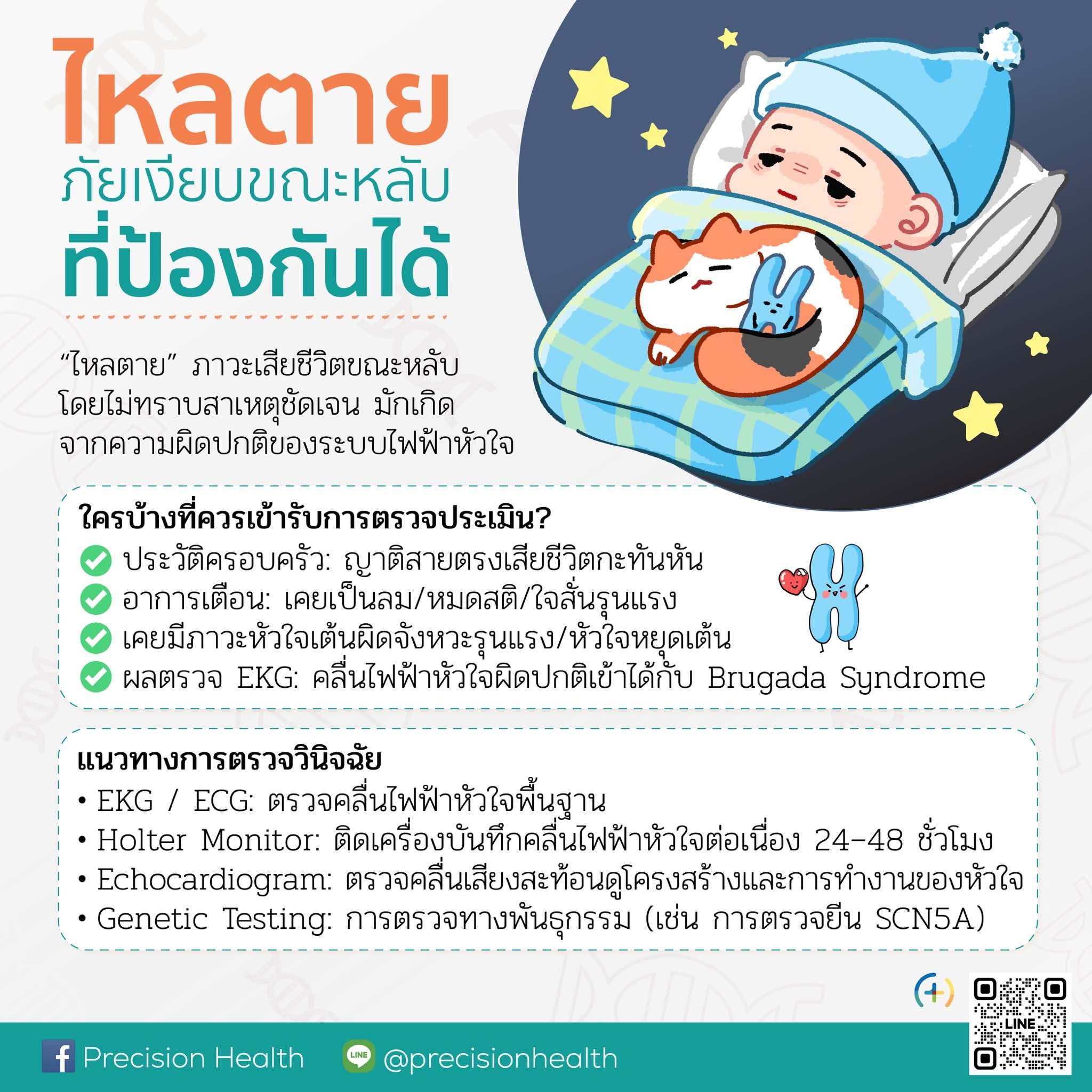
“ไหลตาย” ภัยเงียบขณะหลับที่ป้องกันได้
“ไหลตาย” ภัยเงียบขณะหลับที่ป้องกันได้
“ไหลตาย” หรือภาวะเสียชีวิตกะทันหันขณะหลับโดยไม่ทราบสาเหตุชัดเจน (Sudden Unexpected Death Syndrome: SUDS) มักมีสาเหตุหลักมาจาก ความผิดปกติของระบบไฟฟ้าหัวใจ ส่งผลให้หัวใจห้องล่างเต้นผิดจังหวะอย่างรุนแรง (Ventricular Fibrillation: VF) และหยุดสูบฉีดเลือดไปเลี้ยงสมองอย่างกะทันหัน
หนึ่งในโรคทางพันธุกรรมที่เกี่ยวข้องกับภาวะนี้คือ กลุ่มอาการบรูกาดา (Brugada Syndrome) ซึ่งทำให้ระบบไฟฟ้าหัวใจทำงานผิดปกติ
(หมายเหตุ: Brugada Syndrome ไม่ใช่ชื่อเดียวกับ “ไหลตาย” แต่เป็นหนึ่งในภาวะสำคัญที่เพิ่มความเสี่ยงต่อการไหลตาย)
ใครบ้างที่ควรเข้ารับการตรวจประเมิน?
แม้ร่างกายจะดูแข็งแรงดี แต่หากมีสัญญาณเตือนหรือประวัติดังต่อไปนี้ ควรพบแพทย์เพื่อตรวจเช็กระบบไฟฟ้าหัวใจ:
* ประวัติครอบครัว: มีญาติสายตรงเสียชีวิตกะทันหันโดยไม่ทราบสาเหตุ (โดยเฉพาะเมื่ออายุน้อยกว่า 40-50 ปี)
* อาการเตือน: เคยเป็นลม หมดสติ หรือใจสั่นรุนแรงโดยไม่ทราบสาเหตุ
* เคยมีภาวะหัวใจเต้นผิดจังหวะรุนแรง หรือหัวใจหยุดเต้น
* ผลตรวจ EKG: ตรวจพบคลื่นไฟฟ้าหัวใจผิดปกติเข้าได้กับ Brugada Syndrome
ทำไมมักเกิดเหตุขณะนอนหลับ?
การนอนหลับไม่ใช่สาเหตุของโรค แต่ในช่วงพักผ่อน ระบบประสาทอัตโนมัติของร่างกายจะเกิดการเปลี่ยนแปลง ซึ่งไปรบกวนระบบไฟฟ้าหัวใจในผู้ที่มีความเสี่ยงอยู่แล้ว จนกระตุ้นให้เกิดภาวะหัวใจเต้นผิดจังหวะรุนแรงขึ้นมาได้
ปัจจัยกระตุ้นที่ต้องระวัง (โดยเฉพาะผู้ที่มีความเสี่ยงหรือเป็น Brugada Syndrome)
* ไข้สูง (ควรรีบทานยาแล็ดยไข้และเช็ดตัว)
* การดื่มแอลกอฮอล์ ในปริมาณมาก
* ยาบางชนิด ที่ส่งผลต่อระบบไฟฟ้าหัวใจ (ควรแจ้งแพทย์และเภสัชกรทุกครั้ง)
* ภาวะเกลือแร่ในร่างกายไม่สมดุล
* อดนอน หรือมีความเครียดสะสม
แนวทางการตรวจวินิจฉัย
แพทย์จะพิจารณาตรวจประเมินตามความเหมาะสมในแต่ละราย:
* EKG / ECG: ตรวจคลื่นไฟฟ้าหัวใจพื้นฐาน
* Holter Monitor: ติดเครื่องบันทึกคลื่นไฟฟ้าหัวใจต่อเนื่อง 24–48 ชั่วโมง
* Echocardiogram: ตรวจคลื่นเสียงสะท้อนเพื่อดูโครงสร้างและการทำงานของหัวใจ
* Genetic Testing: การตรวจทางพันธุกรรม (เช่น การตรวจยีน SCN5A) ในผู้ที่มีประวัติครอบครัวหรือสงสัยโรคหัวใจทางพันธุกรรม
(หมายเหตุ: การตรวจไม่พบการกลายพันธุ์ของยีน ไม่ได้แปลว่าไม่มีความเสี่ยง เนื่องจากยังมียีนอื่น ๆ หรือปัจจัยที่ยังตรวจไม่พบได้)
ทางเลือกในการรักษา
การรักษาจะขึ้นอยู่กับระดับความเสี่ยงของแต่ละบุคคล (ผู้ป่วย Brugada Syndrome ไม่จำเป็นต้องใส่เครื่องกระตุกหัวใจทุกราย):
* เครื่องกระตุกหัวใจไฟฟ้าแบบฝังในร่างกาย (ICD): สำหรับผู้ที่มีความเสี่ยงสูงเพื่อป้องกันการเสียชีวิตกะทันหัน
* การจี้หัวใจด้วยสายสวน (Catheter Ablation): เพื่อทำลายจุดกำเนิดไฟฟ้าหัวใจที่ผิดปกติในผู้ป่วยบางราย
* การใช้ยา: ควบคุมจังหวะหัวใจตามดุลยพินิจของแพทย์เฉพาะทาง
ไหลตายป้องกันได้ หากรู้ทันความเสี่ยง
หากคุณหรือคนใกล้ชิดมีประวัติครอบครัวเสียชีวิตกะทันหัน หรือเคยเป็นลมหมดสติโดยไม่ทราบสาเหตุ อย่ามองข้ามแม้จะรู้สึกแข็งแรงดี การพบแพทย์หัวใจเพื่อตรวจประเมินตั้งแต่เนิ่น ๆ คือสิ่งสำคัญที่สุดในการดูแลชีวิตคุณและคนที่คุณรัก
“Sudden Death During Sleep”: A Silent Threat That Can Be Prevented
“Sudden death during sleep,” or sudden unexpected death syndrome (SUDS), refers to sudden death occurring during sleep without a clearly identified cause. One of the major underlying mechanisms is an abnormality in the heart’s electrical system, which can lead to life-threatening ventricular arrhythmias such as ventricular fibrillation (VF). When this occurs, the heart can no longer pump blood effectively to the brain, resulting in sudden cardiac arrest.
One of the genetic conditions associated with this type of sudden cardiac death is Brugada syndrome, a condition that affects the electrical activity of the heart.
Note: Brugada syndrome is not synonymous with “sudden death during sleep.” Rather, it is one of the important conditions that can increase the risk of sudden cardiac death.
Who Should Consider Cardiac Evaluation?
Even if you appear to be healthy, you should consult a doctor for an evaluation of your heart’s electrical system if you have any of the following warning signs or risk factors:
* Family history: A close relative has experienced sudden unexplained death, particularly at a young age (e.g., before the age of 40–50).
* Warning symptoms: A history of unexplained fainting, loss of consciousness, or severe episodes of palpitations.
* Previous serious arrhythmia or cardiac arrest.
* Abnormal ECG/EKG findings: An electrocardiogram shows abnormalities suggestive of Brugada syndrome.
Why Can It Happen During Sleep?
Sleep itself does not cause the condition. However, during rest and sleep, changes in the autonomic nervous system can affect the heart’s electrical activity. In people who are already at risk, these changes may trigger dangerous cardiac arrhythmias.
Potential Triggers to Be Aware Of
Especially for people at risk of or diagnosed with Brugada syndrome:
* High fever — fever should be treated promptly with appropriate fever-reducing medication and other recommended measures.
* Heavy alcohol consumption.
* Certain medications that may affect the heart’s electrical activity. Always inform your doctor and pharmacist about your medical history and medications.
* Electrolyte imbalances.
* Sleep deprivation or prolonged stress.
Diagnostic Evaluation
Doctors will determine the appropriate tests based on each individual’s symptoms, medical history, and level of risk. These may include:
* ECG/EKG: A basic test that records the heart’s electrical activity.
* Holter Monitor: A portable device used to continuously record the heart’s electrical activity, typically for 24–48 hours.
* Echocardiogram: An ultrasound examination used to assess the structure and function of the heart.
* Genetic Testing: Genetic testing, such as testing for variants in the SCN5A gene, may be considered in individuals with a family history or suspected inherited cardiac conditions.
Note: A negative genetic test does not necessarily mean that there is no risk. Other genes or genetic factors may be involved and may not yet be identifiable through current testing.
Treatment Options
Treatment depends on each individual’s level of risk. Not everyone with Brugada syndrome requires an implantable cardioverter-defibrillator (ICD).
* Implantable Cardioverter-Defibrillator (ICD): May be recommended for individuals at high risk of life-threatening arrhythmias or sudden cardiac death.
* Catheter Ablation: A procedure that targets and eliminates abnormal areas responsible for dangerous electrical activity in selected patients.
* Medication: Certain medications may be used to manage or prevent abnormal heart rhythms, depending on the patient’s condition and the specialist’s clinical judgment.
Sudden Death During Sleep Can Be Prevented When Risk Is Recognized Early
If you or someone close to you has a family history of sudden unexplained death or has experienced unexplained fainting or loss of consciousness, do not overlook these warning signs—even if you otherwise feel completely healthy.
Early evaluation by a cardiologist can be an important step in identifying potential risks and protecting you and your loved ones.